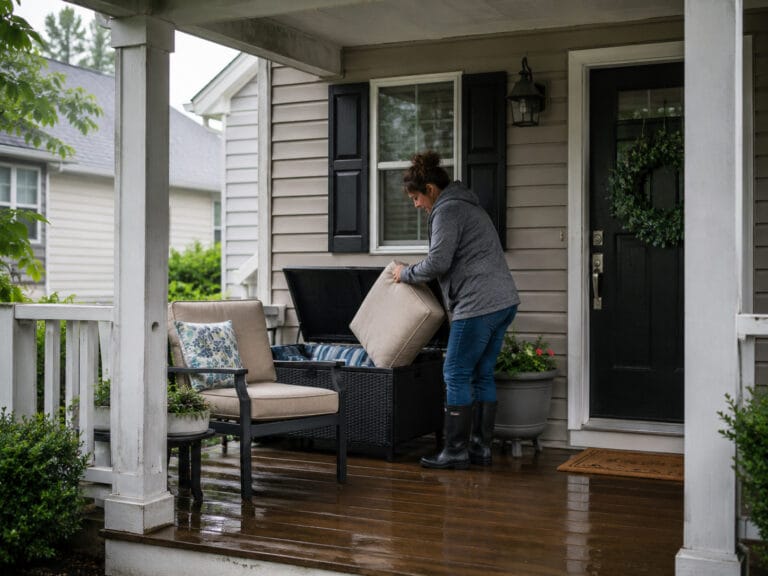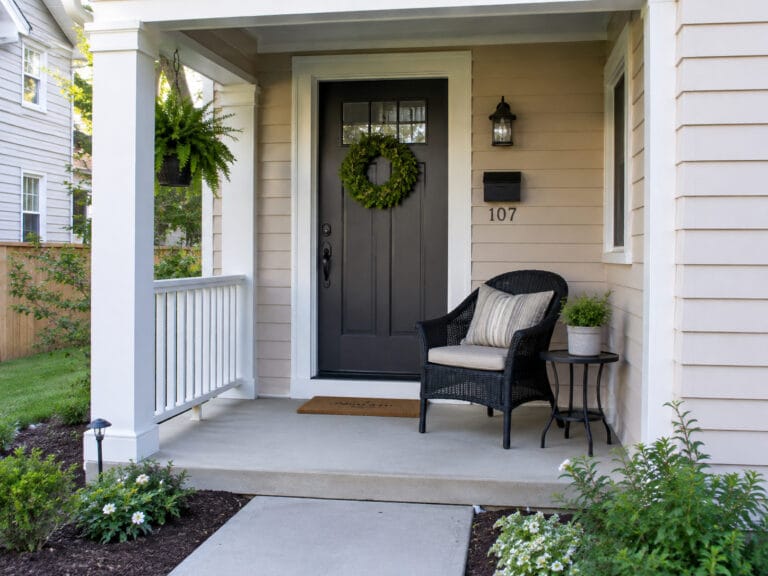
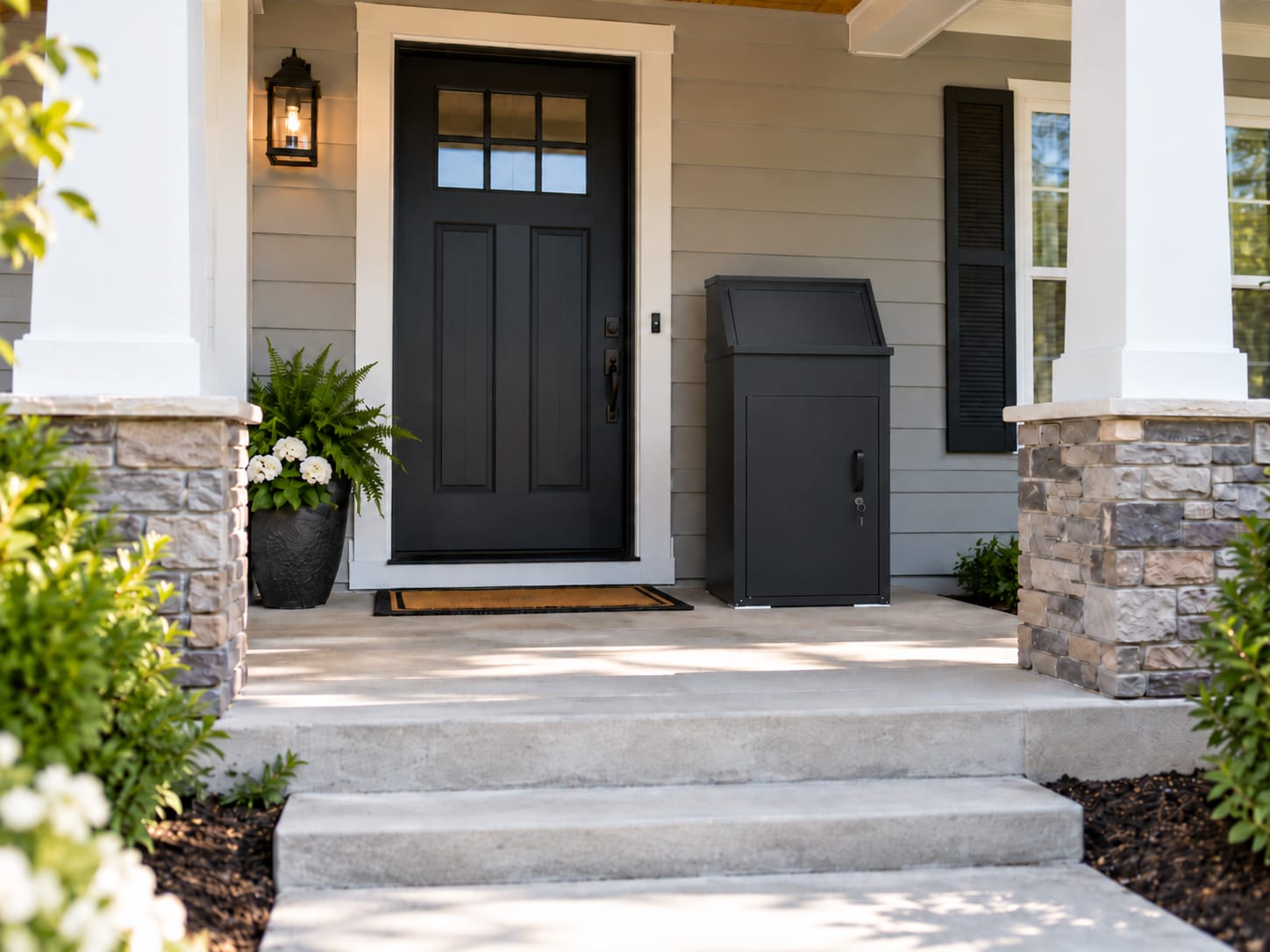
A package delivery box can fit beside your front door and still be in the wrong place.
The box itself is only part of the space you need to plan.
You also need room for:
- a delivery driver to notice and reach the box;
- the front door or storm door to open fully;
- people to walk between the steps and entrance;
- the package box lid, hatch, or retrieval door to open;
- packages to stay reasonably protected from rain and runoff.
So the better question is not:
“Where will the package box fit?”
It is:
“Where can a delivery driver find and use the box without making the entrance harder for everyone else to use?”
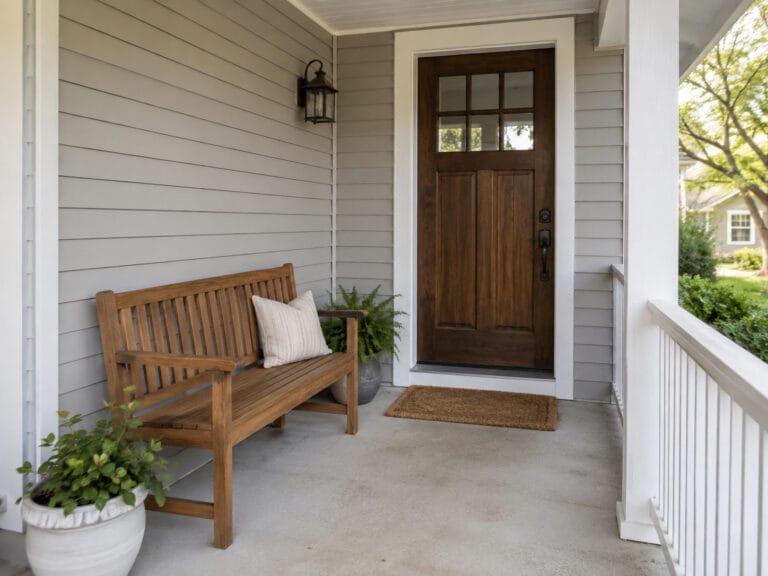
For many homes, that means placing the box beside the front door, outside the door swing and main walkway, and under as much weather protection as the porch provides.
This guide explains how to choose the best location based on delivery access, visibility, door clearance, walking space, weather exposure, and everyday porch use.
Table of Contents
Quick Answer: Where Should a Package Delivery Box Go?
For many front porches, the best starting location is beside the front door, but not so close that it interferes with the entrance.
A good location should usually pass these checks:
| Placement Check | What to Look For |
|---|---|
| Delivery visibility | Easy to recognize from the normal delivery approach |
| Door clearance | Does not interfere with the front door, storm door, or screen door |
| Clear walkway | Stays outside the main route from the steps to the entrance |
| Weather protection | Preferably under a roof or overhang |
| Box access | Lid, hatch, or retrieval door can open fully |
| Ground surface | Stable, reasonably level, and not prone to standing water |
| Security setup | Can be installed or anchored according to the manufacturer’s instructions |
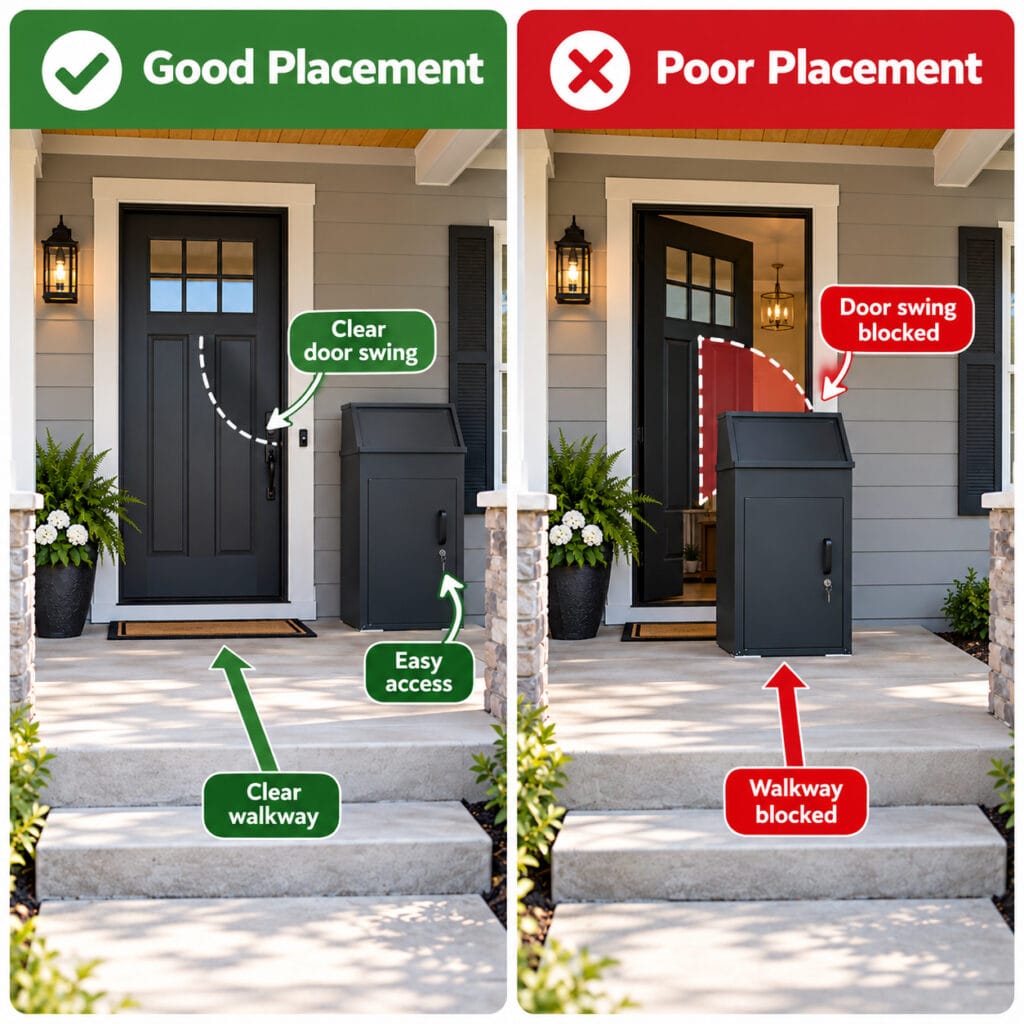
There is no single perfect location for every porch.
The right spot depends on:
- how the front door opens;
- where the porch steps or walkway approach the house;
- the size and opening style of the delivery box;
- where rain actually reaches the porch;
- how much floor space is available.
Is Beside the Front Door Usually the Best Spot?
Often, yes.
Placing the package box beside the front door has several advantages:
- it is close to the driver’s normal delivery point;
- the box is easier to notice;
- you can retrieve packages without crossing the porch;
- the location may already be protected by the porch roof.
But there is an important distinction:
Beside the door does not mean as close to the door as possible.
A box placed too close to the entrance can interfere with the door swing, reduce standing space, or force people to squeeze between the box and doorway.
Left Side or Right Side of the Door?
There is no universally better side.
Use the side that provides the best combination of:
- usable wall or floor space;
- less conflict with the door swing;
- easier access from the steps or walkway;
- better weather protection;
- a clearer route for people entering the house.
Do not choose a side only because it looks more symmetrical.
The actual delivery route matters more than visual balance.
A useful test is to stand at the bottom of the walkway or porch steps and approach the house the way a driver would.
Which side of the door is easier to see and reach without crossing through furniture or standing directly in the doorway?
That is usually the better starting point.
Keep the Package Box Outside the Door Swing
Door clearance should be one of the first things you test.
Open the front door completely.
Then check whether the proposed package-box location enters the area used by:
- the main front door;
- a storm door;
- a screen door.
Storm doors deserve special attention because many open outward.
A box may appear perfectly positioned when every door is closed and become an obstacle as soon as the outer door opens.
Think in Two Movement Zones
It helps to divide the entrance into two separate zones.
Door Zone
The area needed for the house door to open and for people to enter or leave.
Package Box Access Zone
The area needed for a driver to deposit a parcel or for you to open the box and retrieve it.
Ideally, those two zones should not overlap during normal use.
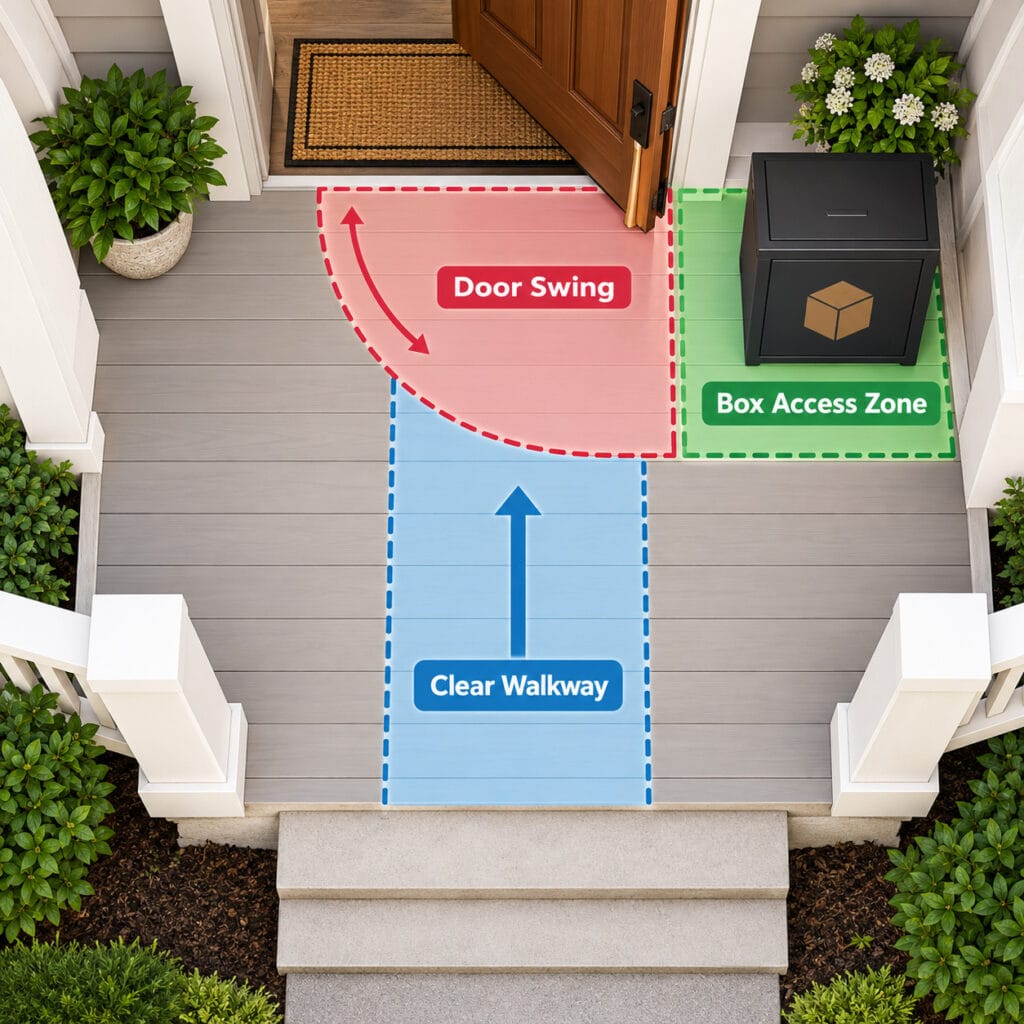
A package box can technically fit beside a door and still be poorly positioned if the door swing and package-box access zone compete for the same space.
Test the Box While It Is Open
Do not evaluate only the closed box.
If the model has a:
- lift-up lid;
- front retrieval door;
- drop hatch;
consider the full opening movement.
The front door and package box should both be usable without requiring one to be closed before the other can operate.
For more detailed spacing principles around porch furniture and the entrance, see our porch furniture clearance guide.
Protect the Main Walkway
A package box should not turn the entrance into an obstacle course.
Start by identifying the route people naturally use:
walkway or porch steps → front door
Try to keep the package box outside that route.
A poor location may force people to:
- turn sideways;
- step around the box;
- walk closer to the edge of the porch;
- carry groceries around an obstacle;
- stand in the package-access area while waiting at the door.
This becomes especially important on a narrow porch.
A package box is useful storage, but the primary job of the porch is still to let people enter and leave the home comfortably.
An Accessibility Reference
As a useful accessibility reference, the U.S. Access Board’s ADA Standards generally require accessible walking surfaces to provide at least 36 inches of clear width, subject to specific exceptions.
That does not automatically make 36 inches a universal requirement for every private residential porch.
For a home entrance, the more practical question is:
Can someone walk from the steps to the front door naturally while the package box is in place and being used?
If people regularly need to turn sideways or wait for someone to close the box before passing, the location is probably too close to the main route.
Make the Box Easy for Delivery Drivers to Find
A delivery box only helps if drivers recognize it and use it.
A box that is too hidden may be overlooked.
The goal is not necessarily to make it highly visible from the street.
A better goal is:
easy to notice once the driver reaches the normal delivery area.
Good locations may include:
- beside the front door;
- along the wall next to the normal approach;
- near the place packages are already commonly left;
- beside the top of the porch steps, as long as the landing remains clear.
Avoid locations:
- behind a large porch chair;
- behind tall planters;
- around a corner that is not visible from the entrance;
- far from the door without any obvious reason.
If the box resembles ordinary storage, a short label can help.
Simple wording such as:
Packages
or:
Deliveries
is usually clearer than a long set of instructions.
Walk the Route Like a Delivery Driver
One of the easiest ways to test a location is to stop looking at it from inside the house.
Start where a delivery person would approach from:
- driveway;
- sidewalk;
- front walk;
- porch steps.
Then walk toward the door while imagining you are carrying a parcel.
Ask:
- Can I see the package box once I reach the porch?
- Is it obvious where the delivery opening is?
- Do I have to walk around furniture to reach it?
- Can I use the box without standing directly in the doorway?
- Would I mistake it for an ordinary storage container?
This test is simple, but it catches a common problem:
a location that looks logical to the homeowner may not be obvious from the delivery approach.
Add Delivery Instructions When Available
Once you choose a clear location, consider adding the same instruction through the delivery-management tools available from the carrier.
USPS, FedEx, and UPS provide delivery-management options for eligible shipments, although availability varies by shipment and delivery instructions are not always guaranteed to be followed.
Keep instructions short and specific.
For example:
Package box to the left of front door.
That is more useful than a long explanation of the porch layout.
Physical placement should still do most of the work.
A box that is obvious and easy to access is more reliable than a poorly positioned box that depends entirely on written instructions.
Balance Visibility and Security
There is a tradeoff between hiding the box and making it usable.
If it is too exposed, it may attract unnecessary attention.
If it is too concealed, drivers may not notice it.
A practical middle ground is:
visible from the normal delivery approach, but not necessarily the most prominent object from the street.
For example, a box against a side wall beside the front door may be easy to find after a driver reaches the porch while remaining less visually prominent than one placed at the outer edge of the entrance.
If the package box includes:
- a lock;
- floor anchors;
- wall anchors;
- other security hardware;
install those features according to the manufacturer’s instructions.
If your existing doorbell camera already covers the entrance, it may also be useful for the package-box area to remain within the existing field of view.
Security, however, should not require hiding the box so thoroughly that delivery drivers cannot find it.
Choose the Most Weather-Protected Spot
When possible, put the delivery box under the covered portion of the porch.
Even if the box is designed for outdoor use, reducing direct exposure to:
- rain;
- snow;
- strong sunlight;
- wind-driven moisture;
is generally a sensible placement strategy.
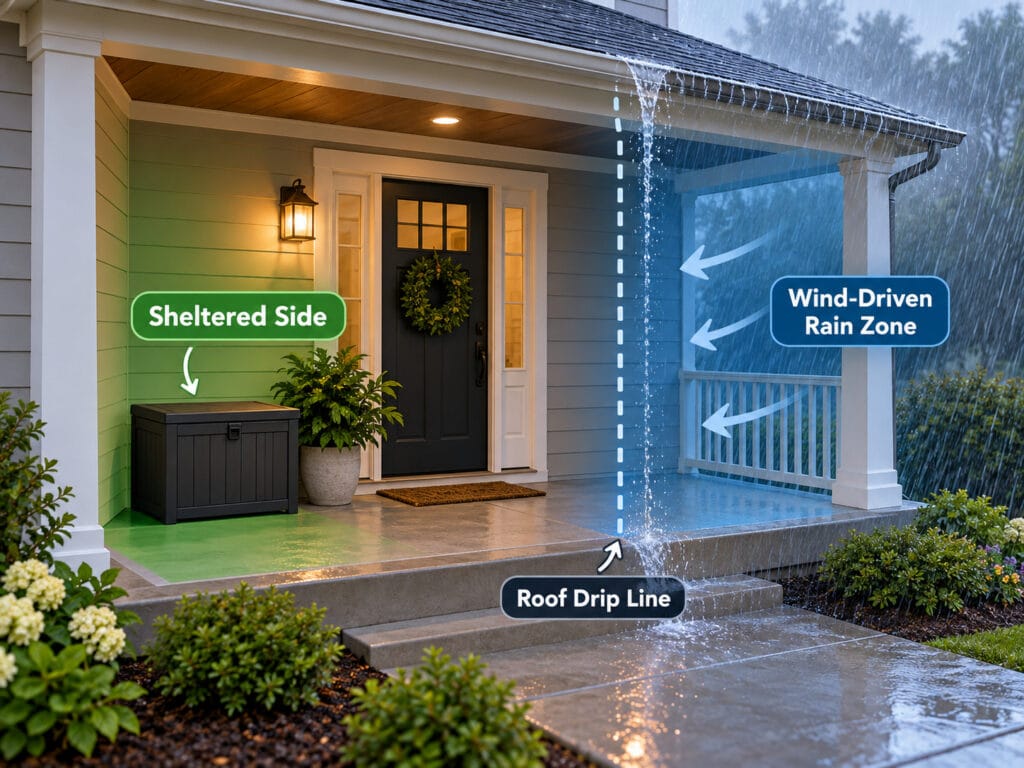
Look for locations such as:
- beneath the main porch roof;
- under a deep overhang;
- beside a sheltered wall;
- away from roof runoff.
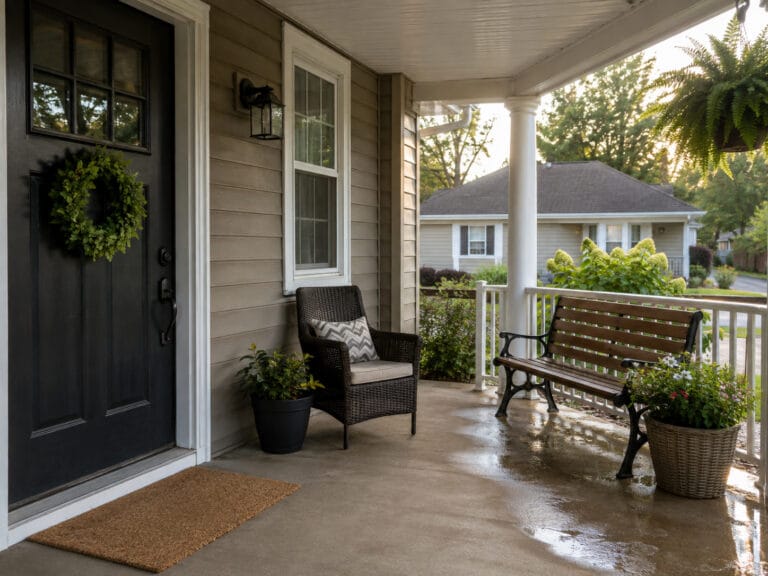
A Covered Porch Can Still Get Wet
A porch roof does not necessarily keep the entire floor dry.
Wind can push rain several feet under an overhang.
Instead of judging exposure only on a dry day, look at the porch after actual rain.
Notice:
- which sections of the floor become wet;
- where water blows inward;
- where puddles form;
- where runoff reaches the porch.
A useful rule is:
Use real wet-floor patterns, not just the roofline, to choose the driest location.
For broader weather planning around the entrance, see our guide to protecting front porch furniture from rain and weather.
Avoid Roof Drip Lines and Downspouts
Do not place the box directly where water regularly lands.
Watch for:
- leaking gutters;
- roof drip lines;
- downspout discharge;
- melting snow or ice;
- standing water near the base.
Even a weather-resistant box can become inconvenient if water constantly falls onto the lid or pools around it.
Use a Stable Surface Without Blocking Drainage
The package box should sit securely.
An uneven surface may cause:
- the box to rock;
- retrieval doors to misalign;
- lids to operate poorly;
- water to collect unevenly.
Many outdoor porch surfaces have a slight drainage slope, which is normal.
The box does not need a perfectly level indoor-style floor, but it should sit securely without wobbling.
Also make sure it does not block:
- drains;
- drainage channels;
- normal runoff paths.
Leave Enough Space for the Box to Open
Overall box dimensions are only part of the placement problem.
The opening mechanism creates its own use zone.
Top-Opening Lid
A top-opening box needs clearance above and sometimes behind the lid.
Check for nearby:
- window sills;
- railing caps;
- shelves;
- wall decor.
The lid should be able to open fully without striking another surface.
Front Retrieval Door
A front-opening box needs free floor space in front.
Do not position the retrieval door directly against:
- a planter;
- porch furniture;
- a stair opening;
- a tight wall corner.
Drop Hatch or Delivery Opening
The delivery opening should be easy to reach without forcing the driver to stand in the middle of the entrance.
Also check the actual opening dimensions against the kinds of packages you normally receive.
That is different from overall box capacity.
If package size becomes the main concern, it is better treated as a separate buying question rather than a placement issue.
You can also compare the dimensions and opening style of our lockable package delivery box with the space available beside your front door.
How Far From the Front Door Should the Box Be?
There is no useful universal distance such as “12 inches from the door” that works for every porch.
Different homes have different:
- door widths;
- swing directions;
- storm doors;
- porch depths;
- box-opening styles.
Instead, ask three questions:
- Can the front door open completely?
- Can someone stand at the entrance comfortably?
- Can the package box open and be used at the same time?
If all three are true, the location is likely workable.
If someone retrieving a parcel has to block the doorway, or the house door has to stay closed while the package box is being used, move the box farther to the side.
What About a Small Front Porch?
On a small porch, the planning order matters.
Use:
Front door → main walkway → package box → other furniture
not:
Package box → furniture → whatever walkway remains
A compact porch may work best with:
- one package box beside the door;
- a completely clear route from the steps to the entrance;
- minimal furniture in that same zone.
Do not fill the last available corner simply because the box physically fits there.
If the porch already has:
- a bench;
- a rocking chair;
- a swivel chair;
- large planters;
check whether those pieces already use the remaining movement space.
For more layout ideas, see our small front porch ideas guide.
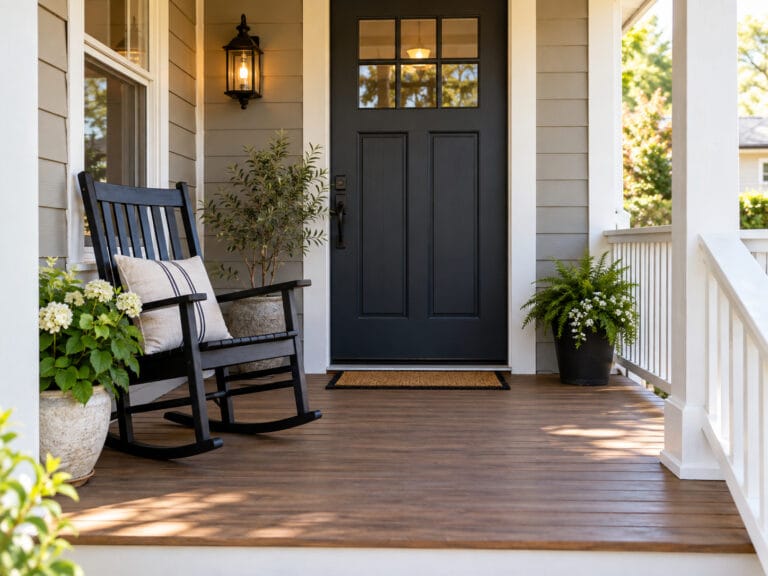
Can a Package Box Go Near Porch Furniture?
Yes, provided the two uses remain separate.
A package box may fit beside:
- a porch bench;
- a side table;
- other storage furniture.
But it should not sit inside:
- a rocking chair’s movement zone;
- a swivel chair’s rotation zone;
- the area where someone extends their feet while seated;
- a space needed to remove a furniture cover.
The box should remain usable even while the seating area is occupied.
Likewise, someone sitting on the porch should not need to move every time a package is delivered.
Can It Go Near the Porch Steps?
Sometimes, but be careful.
A box near the top of the steps can be very easy for drivers to find.
The downside is that it may reduce the landing area.
Avoid putting it where someone arriving at the top of the stairs immediately has to step around it.
Also avoid locations where the box:
- narrows the stair opening;
- creates a tripping obstacle;
- sits too close to the porch edge.
A side wall reached after stepping onto the porch is often more practical than a box positioned directly beside the stair opening.
Can a Package Box Go on an Uncovered Porch?
Yes, if the specific product is designed for that type of outdoor exposure.
For an uncovered location, pay closer attention to:
- materials;
- drainage;
- lid design;
- weather seals;
- anchoring;
- direct sunlight.
Check the manufacturer’s outdoor-use guidance.
“Outdoor use” can describe very different levels of weather resistance from one product to another.
If you have both covered and uncovered locations that work equally well for delivery access, the covered location will usually be the simpler placement choice.
Check Installation and Community Rules
Some package boxes simply sit on the porch.
Others are designed to be:
- anchored to the floor;
- attached to a wall;
- secured with specific hardware.
Follow the manufacturer’s installation instructions.
If you live in a:
- condominium;
- apartment;
- townhome;
- HOA community;
check whether rules apply to exterior fixtures, shared walkways, or permanent anchoring before drilling into a floor or wall.
This is especially important when the area outside your door is technically shared property rather than part of a private porch.
Test the Layout With Painter’s Tape
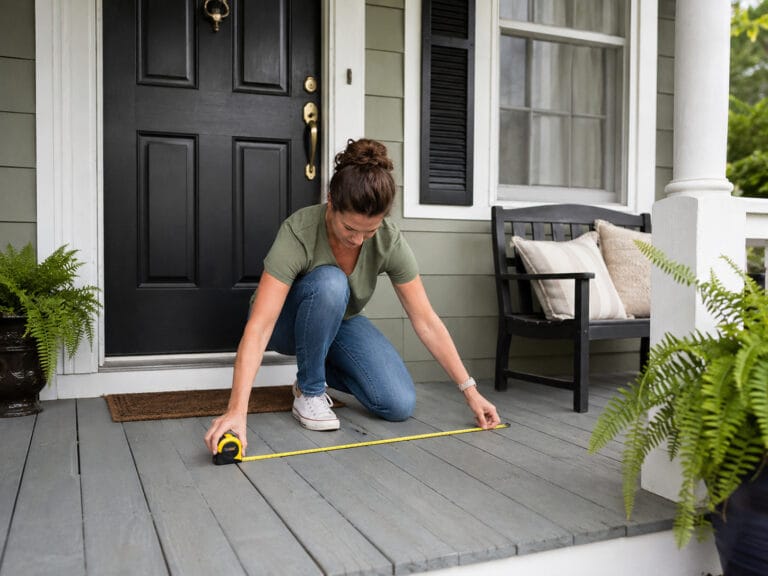
Before ordering a larger package box, outline its footprint with painter’s tape.
Mark:
- overall width;
- overall depth;
- the lid or retrieval-door opening zone.
Then test the entrance.
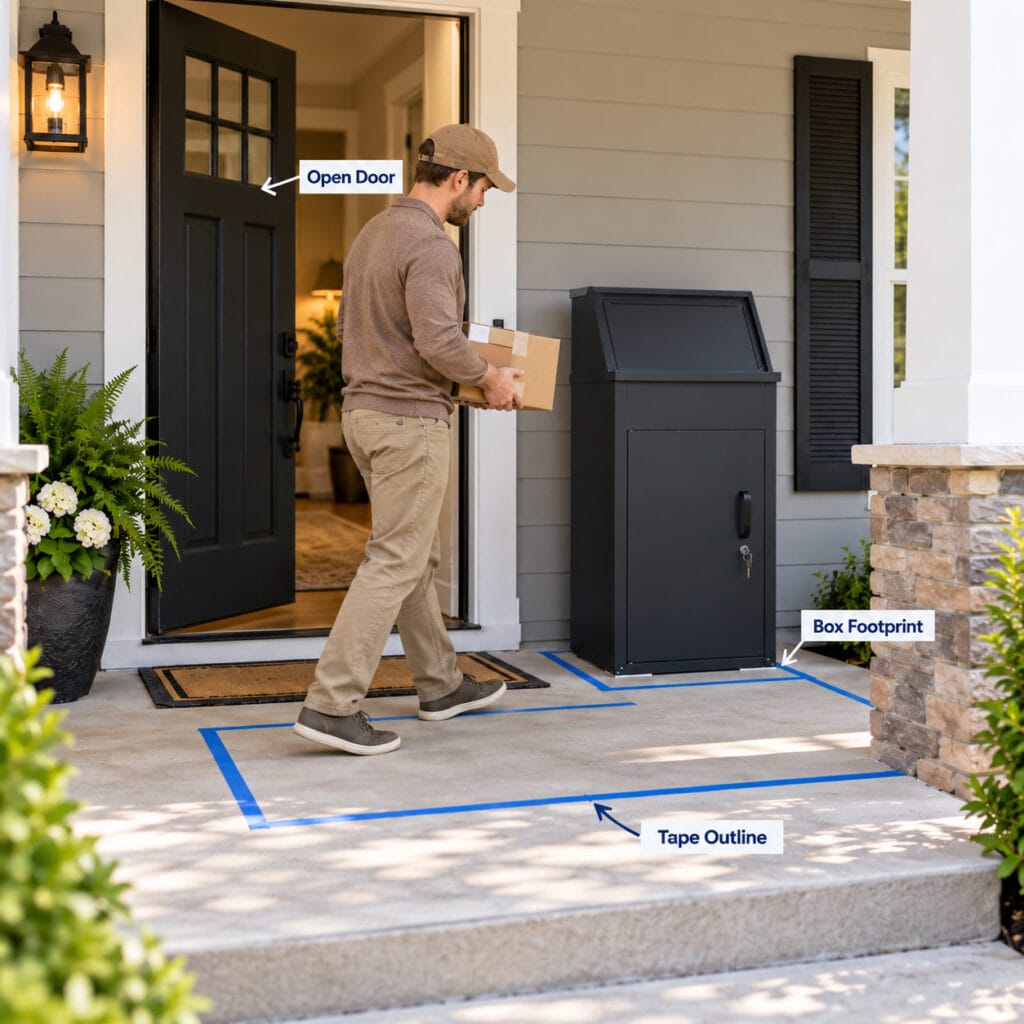
Open Every Relevant Door
Open the main front door and any storm or screen door completely.
Walk From the Steps to the Door
Use your normal route.
Stand Where a Driver Would Stand
Pretend you are holding a parcel and placing it into the box.
Test Retrieval
Stand where you would need to stand to unlock or open the box.
Carry Something Through the Entrance
Try the route while holding grocery bags or a medium-size package.
If a tape outline already makes the porch awkward to use, the physical box will not improve the situation.
On a narrow porch, a few inches can make a noticeable difference.
HomyEntry Package Box Fit Check
Before choosing the final location, check these seven things.
1. Delivery Visibility
Can a driver recognize the box from the normal delivery approach?
2. Door Swing
Can the front door, storm door, and screen door open completely?
3. Clear Walkway
Can people walk between the steps and entrance without going around the box?
4. Package Box Access
Can the lid, hatch, or retrieval door open fully?
5. Weather Exposure
Is the box reasonably protected from direct rain, snow, roof runoff, and standing water?
6. Stable Surface
Does the box sit securely without blocking drainage?
7. Security Setup
Can it be locked or anchored according to the manufacturer’s instructions?
The practical rule is simple:
Make the package box easy for the delivery driver to use without making the porch harder for everyone else to use.
Common Package Delivery Box Placement Mistakes
Putting It Too Close to the Door
The box can interfere with the door swing or the space needed to stand at the entrance.
Hiding It Too Well
If drivers cannot easily recognize the box, they may leave packages elsewhere.
Blocking the Main Walkway
Residents and visitors should not need to step around the box every time they enter the home.
Ignoring the Box Opening
The box may fit perfectly while closed and become difficult to use when the lid or retrieval door opens.
Choosing the Wettest Part of the Porch
A roof does not necessarily protect against wind-driven rain, runoff, or standing water.
Placing It Directly at the Top of the Steps
This can reduce useful landing space and create an unnecessary obstacle.
Choosing the Side Based Only on Appearance
The prettier or more symmetrical location is not always the easiest location for a delivery driver to reach.
Final Recommendation
For most front porches, the best place for a package delivery box is:
near the front door, outside the door swing and main walking path, in a location that is easy for delivery drivers to recognize and as protected from weather as the porch allows.
Do not focus only on how close the box is to the door.
Check the entire system:
- how the delivery driver approaches;
- how the front door opens;
- where people normally walk;
- how the package box opens;
- where rain and runoff actually reach the porch.
A well-placed package box should be:
easy to find, easy to use, and easy to walk past.
Browse our Package Storage options or explore more practical front-porch solutions on our Porch page.
Frequently Asked Questions
Where is the best place to put a package delivery box?
For many homes, beside the front door is the best starting point, provided the box stays outside the door swing and main walkway and remains easy for delivery drivers to reach.
Can I put a package box right beside the front door?
Yes, as long as the front door, storm door, and package box can all open fully without interfering with one another or blocking the entrance.
Should a package delivery box be visible from the street?
Not necessarily. It should be easy for a delivery driver to recognize after approaching the porch, but it does not need to be the most visible object from the street.
Should a package delivery box be under a covered porch?
A covered location is preferable when available because it reduces direct exposure to rain, snow, and sun. Always follow the specific product’s outdoor-use guidance.
Can a package box go near the porch steps?
It can, but avoid reducing the landing area or creating an obstacle at the top of the stairs. A side-wall location after the landing is often easier to use.
How do I know if a package box is too large for my porch?
Mark the box footprint and opening zone with painter’s tape, then open the front door and walk through the entrance normally. If the taped area already makes the route awkward, choose a smaller box or another location.