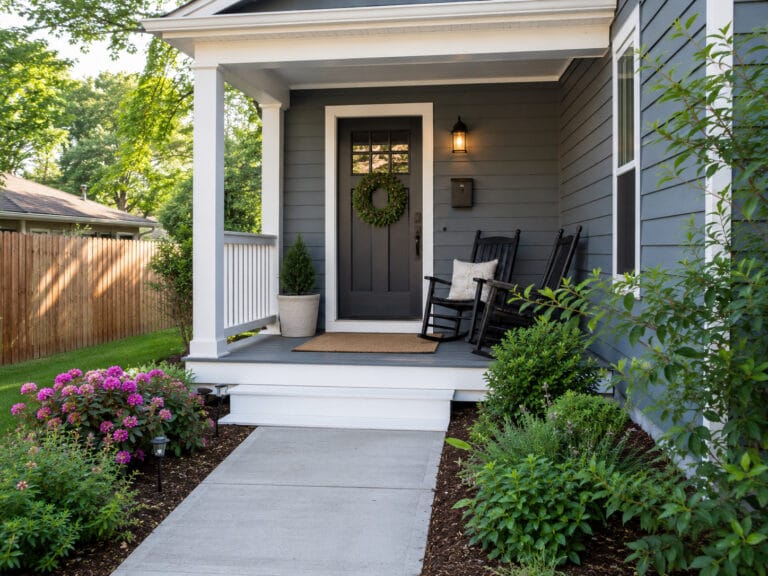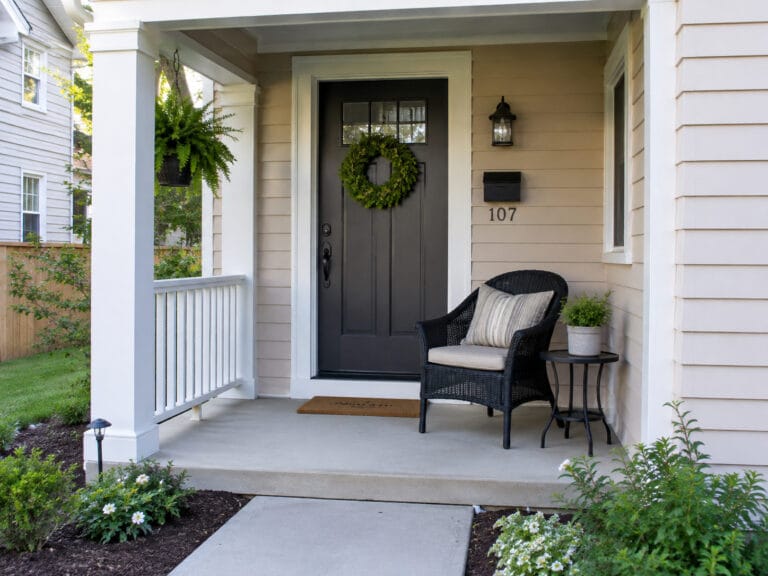
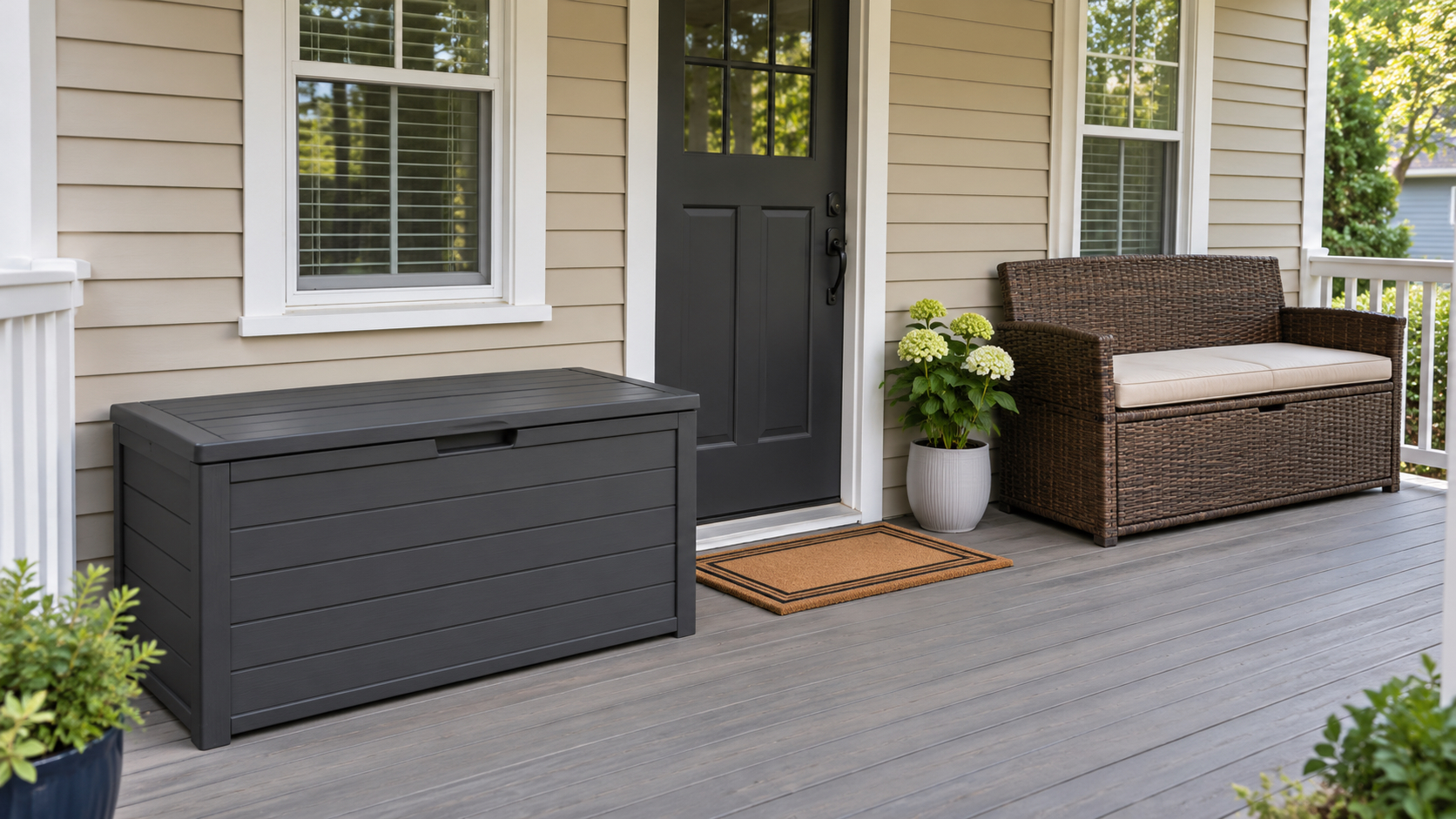
A small front porch may need to provide storage, seating, and a clear path to the front door—all within a limited space.
That makes choosing between a deck box and an outdoor storage bench more important than it first appears.
Both can keep outdoor essentials organized, but they serve different purposes. A deck box prioritizes storage, while a storage bench combines a designated seat with a storage compartment.
The right choice depends on whether you actually need another place to sit, how much room the furniture uses when opened, and whether it makes your entrance easier to use.
Table of Contents
Quick Answer: Deck Box or Storage Bench?
Choose a deck box when storage is your main priority, especially if your porch already has seating.
Choose an outdoor storage bench when you need a place to sit and can use the space underneath for smaller outdoor essentials.
| Feature | Deck Box | Outdoor Storage Bench |
|---|---|---|
| Primary purpose | Storage | Seating and storage |
| Seating | Only on models approved for sitting | Designed for seating; check weight rating |
| Storage | Often better suited to bulky items | Usually more limited by seat construction |
| Space needed | Footprint plus lid clearance | Footprint plus sitting and standing space |
| Storage access | Usually opens from the top | May require lifting the seat or moving a cushion |
| Best fit | Storage-first porch | Porch needing an extra seat |
HomyEntry Fit Check: A storage bench only saves useful space when you actually need the seating. Otherwise, a dedicated deck box may be the simpler choice.
1. Start With Your Porch’s Main Purpose
Before comparing furniture, consider how you use your front porch on an ordinary day.
Is it mainly a passage to your front door? Do you already have a pair of porch chairs? Do you need somewhere to sit while changing shoes? Or are outdoor cushions and seasonal accessories creating clutter?
Your answers should guide the choice.
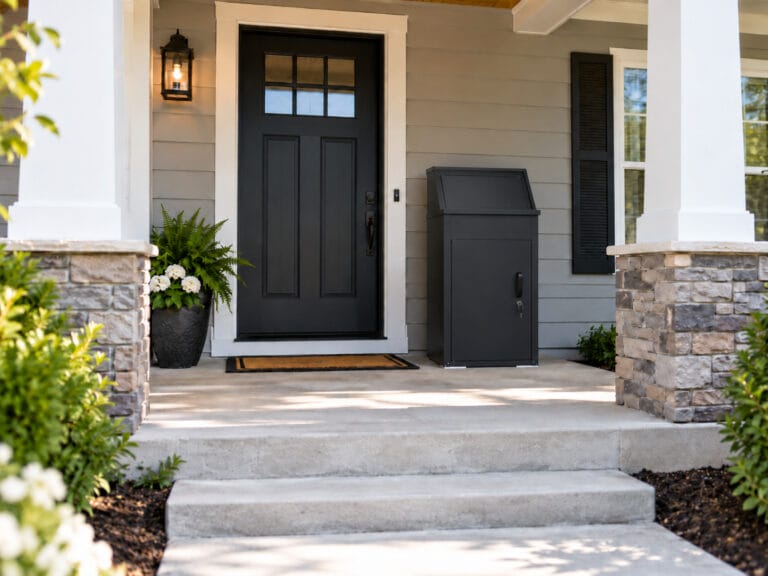
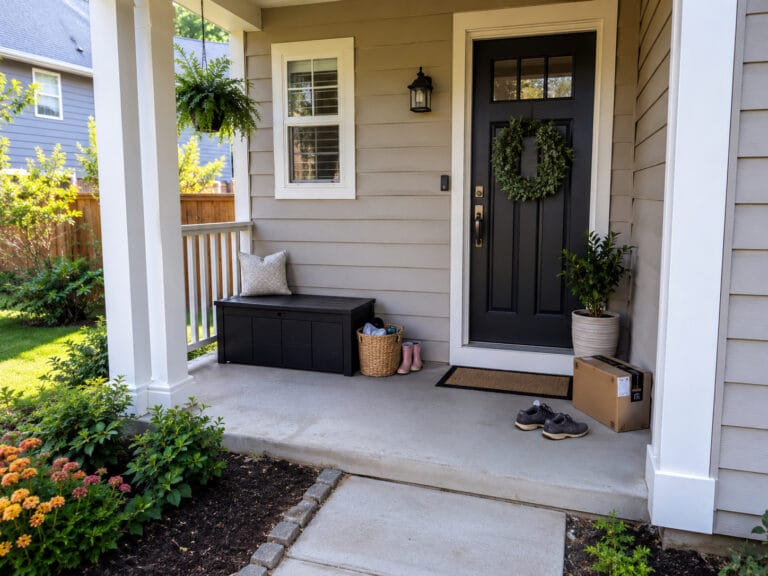
When a deck box makes more sense
A deck box is worth considering when:
- Your porch already has enough seating.
- You need to store cushions, outdoor pillows, or seasonal accessories.
- Most stored items are used occasionally rather than throughout the day.
- You want storage without creating another sitting area.
For example, if a covered porch already has two chairs, adding another bench may offer little practical benefit. A deck box could make better use of the remaining space.
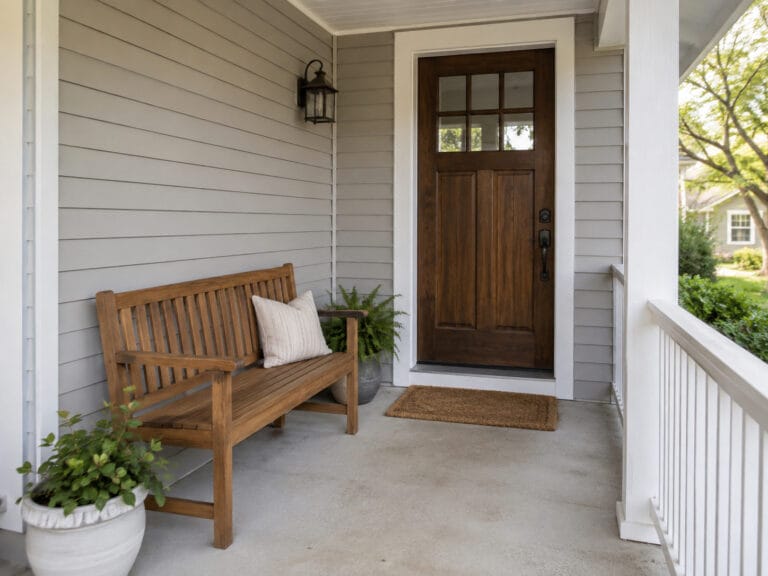
When a storage bench makes more sense
An outdoor storage bench may be more useful when:
- You want a convenient seat near the entrance.
- You do not have room for both a chair and a storage container.
- You need storage for smaller accessories or outdoor throws.
- You have a suitable wall where a bench will not obstruct foot traffic.
A storage bench can combine two functions, but only if both are genuinely useful.
2. Which Takes Up Less Usable Porch Space?
A common assumption is that furniture serving two purposes must save space.
That is not always true.
A deck box primarily needs room for its exterior footprint and lid to open. A storage bench also needs space for someone to sit, position their feet, and stand up.
If the bench has a lift-up seat, it needs opening clearance as well.
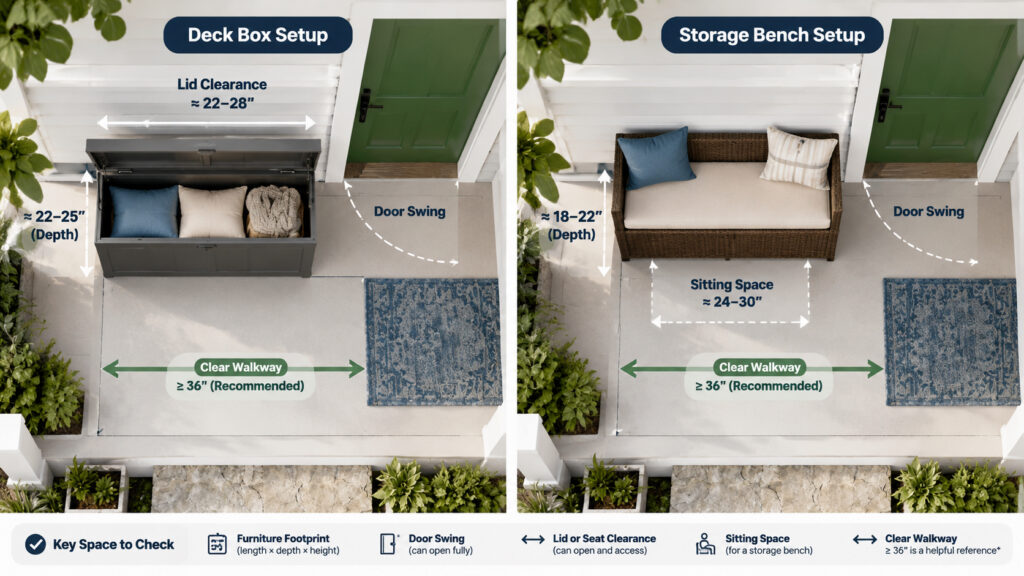
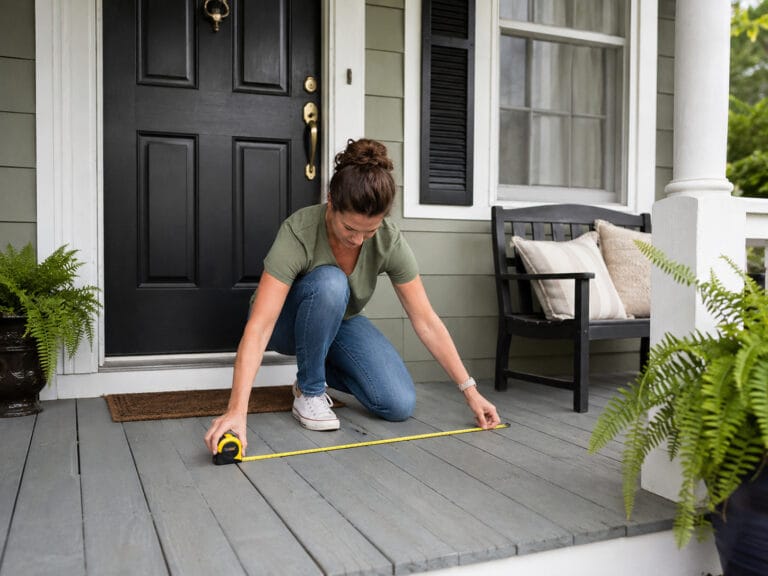
Measure the footprint and the usable space
Start with three basic measurements:
- Width: How much wall or railing length is available?
- Depth: How far can the furniture extend into the porch?
- Clear path: How much walking space remains between the furniture and the entrance?
For example, imagine a porch with 72 inches of usable depth.
If a storage unit projects 24 inches from the wall, 48 inches remain before accounting for other obstacles.
That measurement alone does not guarantee a comfortable layout. You still need to consider the door swing, steps, and whether someone will be sitting in front of the unit.
For context, the U.S. Access Board’s accessible-route guidance generally specifies 36 inches of continuous clear width for accessible routes. This is a useful planning reference, not a universal legal requirement for every private residential porch. Applicable local rules and actual access needs should take priority.
For a more complete measuring process, see our Front Porch Furniture Size Guide.
Check the space needed while using the furniture
A deck box may fit neatly against a wall when closed, but its lid could hit a window sill or railing when opened.
A storage bench might fit along the same wall, yet become an obstacle when someone sits on it.
The critical difference is the space the furniture needs in use, not just the space it occupies while closed.
Try a simple painter’s tape test
Before buying, mark the furniture’s proposed footprint on your porch with painter’s tape.
Then:
- Open the front door fully.
- Walk through while carrying a grocery bag or package.
- Simulate opening the storage lid.
- For a bench, place a chair in the proposed location and try sitting and standing.
- Check whether someone can still approach the door comfortably.
This test helps reveal problems that product dimensions alone may miss.
3. Which Is Easier to Open and Use?
Storage is most valuable when the contents are easy to reach.
Deck box access
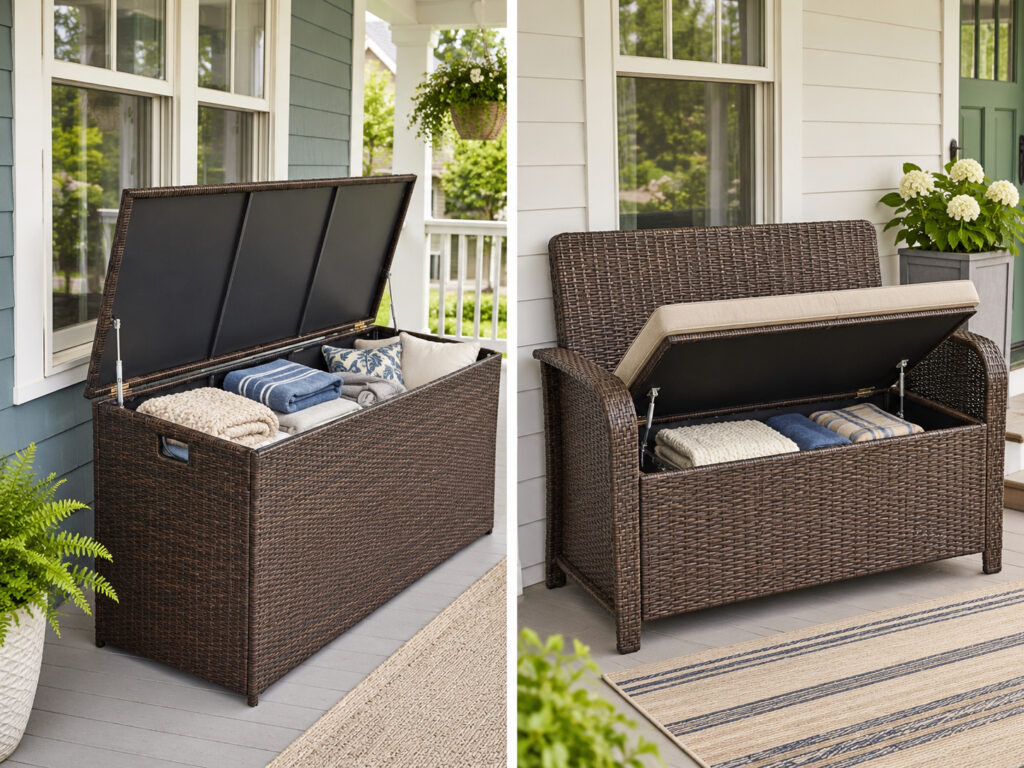
Most deck boxes have a top-opening lid. Some include lift-assist mechanisms, while others use simpler hinges.
They can work well for:
- Outdoor cushions and pillows
- Seasonal porch decorations
- Gardening accessories
- Spare outdoor supplies
A deeper box may require moving items around to reach something at the bottom.
Storage bench access
Many outdoor storage benches use a lift-up seat.
That creates a practical tradeoff: someone must stand before you can open the compartment. A removable seat cushion may also need to be moved.
If you regularly need items while someone is sitting on the bench, this arrangement may become inconvenient.
One useful distinction is between occasional storage and everyday access.
For items used only once in a while, either option may work well. For frequently needed items, consider how many steps it takes to open the compartment.
4. Can a Deck Box Be Used for Seating?
Some deck boxes are designed to provide extra seating, but others are intended only for storage.
Never assume a lid is safe to sit on simply because it looks sturdy.
Check whether the manufacturer:
- Explicitly permits seating
- Provides a seating weight rating
- Describes the lid as reinforced for sitting
- Specifies assembly and use requirements
A useful real-world example comes from outdoor storage manufacturer Keter, which offers both storage benches and deck boxes, including models with reinforced lids designed for seating.
Keter’s 60-gallon storage bench manual also lists separate seating and storage load limits. This illustrates an important point: seating capacity and storage load capacity are not interchangeable.
What about HomyEntry’s storage bench?
The HomyEntry Outdoor Wicker Storage Bench with Cushion is specifically designed to combine seating and hidden storage.
Its listed features include:
- A designated seating surface with cushion
- 660 lb seating capacity
- Dual gas struts supporting the lift-up seat
- A removable cushion cover
- A hidden storage compartment
These features make it a relevant option for a porch that needs an actual seat.
Always confirm the current specifications and follow the manufacturer’s assembly and use instructions before purchasing.
5. Weather Protection: Which Works Better Outdoors?
Neither a deck box nor a storage bench is automatically waterproof.
Weather protection depends on the specific construction, including the lid, joints, materials, liner, and drainage or ventilation design.
A deck box may be designed primarily to protect stored belongings, but this does not guarantee better water resistance than a purpose-built outdoor storage bench.
Covered porch
On a covered porch, furniture is generally exposed to less direct rain, although wind-driven moisture and humidity can still be concerns.
Both options may work when the materials and storage construction suit the location.
Uncovered porch
For an exposed porch, check the manufacturer’s guidance on outdoor use and water resistance.
Keep storage furniture away from concentrated roof runoff and areas where water regularly collects.
If a storage bench has a cushion, check whether it should be removed or protected during wet weather.
For more detail, see How to Keep Porch Cushions Dry and Covered vs. Uncovered Porch Furniture.
6. Four Common Front Porch Situations
The following examples are hypothetical layouts, not documented customer installations. They show how the same furniture can work differently depending on the entrance.
| Your Porch Situation | Better Starting Choice | Why |
|---|---|---|
| Narrow entrance used mostly for coming and going | Compact deck box, if it fits | A seat may be unnecessary |
| Covered porch without any seating | Storage bench | Adds a seat and hidden storage |
| Porch already has two chairs | Deck box | Dedicated storage is likely more useful |
| Small porch needs both seating and storage | Storage bench, if clearance allows | May replace a separate chair and container |
A fifth possibility is worth remembering: neither product may be suitable.
If both interfere with the front door or walking path, move the storage elsewhere rather than forcing another piece of furniture into the entrance.
7. Compare Outdoor Storage Options at HomyEntry
HomyEntry carries both dedicated deck boxes and an outdoor storage bench. These products illustrate different uses, rather than being identical alternatives.
| Product | Main Feature | Best Starting Use |
|---|---|---|
| Outdoor Wicker Storage Bench with Cushion | Seating with hidden storage | An extra seat plus smaller outdoor essentials |
| 100-Gallon Outdoor Storage Deck Box | Lockable steel storage design with mobility features | Storage-first porch |
| 200-Gallon Outdoor Storage Deck Box | Larger dedicated storage compartment | Bulkier items where space allows |
Do not choose based on the gallon number alone. Exterior dimensions, storage access, and the remaining walking space still matter.
If storage size is your main concern, our Deck Box Size Guide covers how to compare dimensions and contents in more detail.
You can also browse Porch Storage & Protection for current product options.
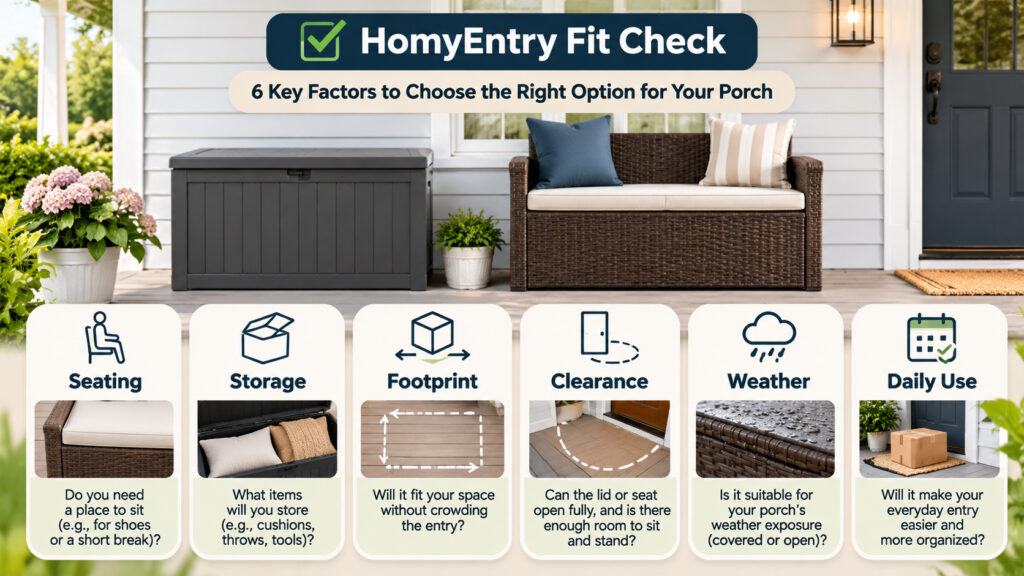
HomyEntry Fit Check: Six Questions Before You Buy
Use this checklist before choosing either product.
| Check | Question to Ask |
|---|---|
| Seating | Will someone actually use this as a seat? |
| Storage | Will the items fit and remain easy to retrieve? |
| Footprint | Does the furniture fit without crowding the entrance? |
| Clearance | Can the door, lid, and seating area all be used comfortably? |
| Weather | Is the product suitable for the porch’s exposure? |
| Daily use | Will this make the entrance more convenient? |
If you answer “no” to the clearance question, reconsider the product or its location.
Final Recommendation
Choose a deck box if your priority is keeping outdoor belongings organized, particularly when your porch already has seating.
Choose an outdoor storage bench if you need both a seat and storage, and the porch has enough room for someone to sit without interrupting the entrance.
The most useful choice is not necessarily the one with the most features or the largest compartment.
It is the one that fits your space and makes your everyday routine easier.
Frequently Asked Questions
Is a storage bench better than a deck box for a small porch?
A storage bench is often better when you need seating as well as storage. A deck box may be more practical when storage is the main priority. Compare the usable space required for each.
Can you sit on an outdoor deck box?
Only if the manufacturer specifically approves the model for seating. Check the product’s seating capacity and instructions before using it as a bench.
Does a storage bench take up less room?
Not necessarily. It combines two functions, but someone sitting on the bench needs additional space. Compare the full usage area rather than the closed furniture dimensions.
Can outdoor cushions stay inside a storage bench?
That depends on the bench’s interior space and weather protection. Store cushions only when dry, and follow the manufacturer’s guidance to reduce moisture-related problems.