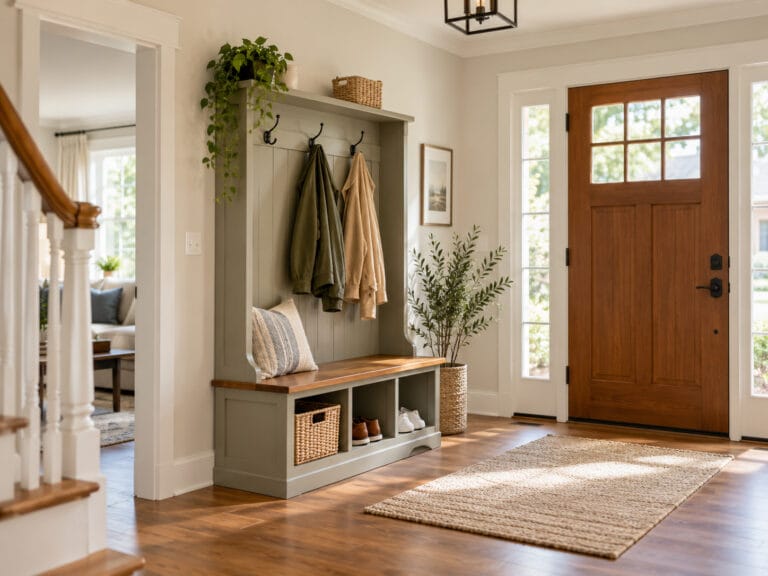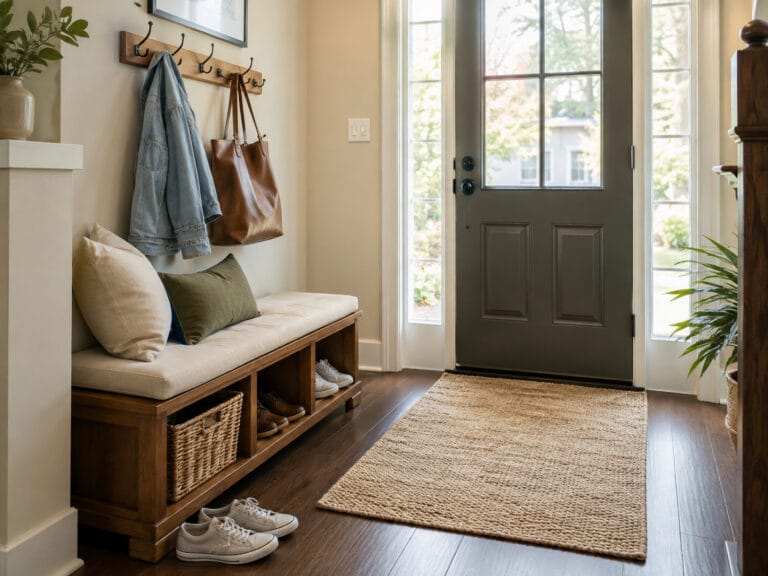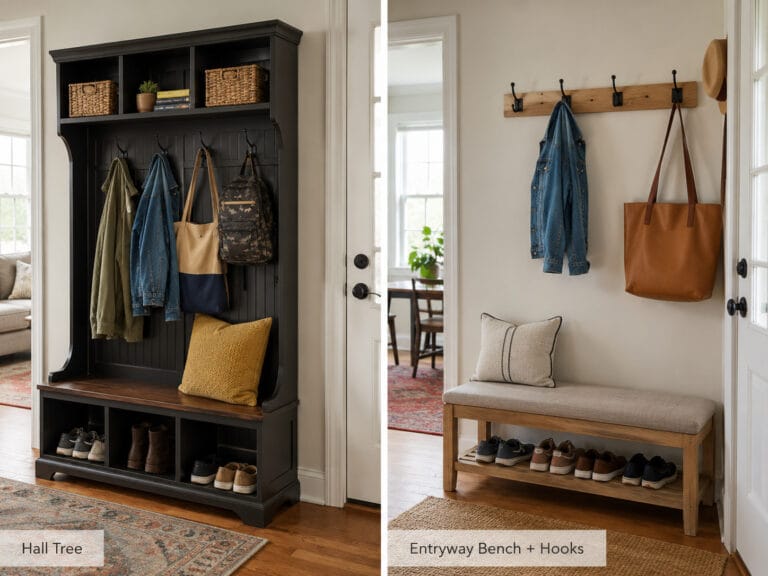
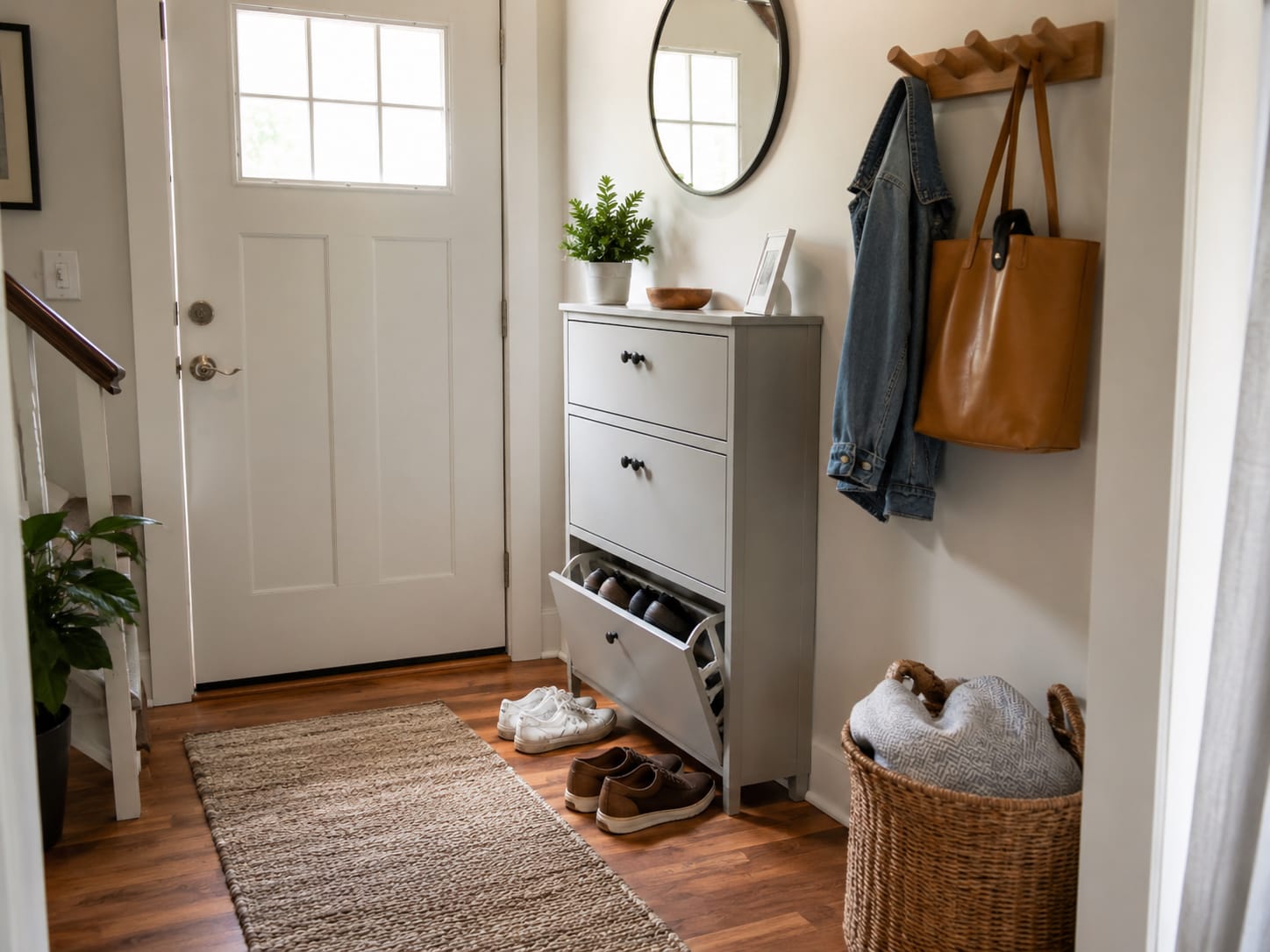
Entryway shoe storage can quickly become a challenge in a small home. Shoes pile up near the door, walking paths become crowded, and the entrance area starts to feel messy before you even step inside.
But the problem is usually not the total number of shoes in a home.
The bigger issue is that the shoes people wear every day often do not have a convenient place near the entrance.
For small entryways, the best shoe storage solution is not always the one with the largest capacity. It is the one that matches your daily habits, fits your available space, and keeps frequently used shoes easy to access without blocking the way.
A practical small entryway usually needs a simple system:
- a place for everyday shoes;
- enough room to move comfortably;
- storage that matches your home layout;
- a spot where bags, keys, and other daily items can land.
This guide explores practical entryway shoe storage ideas for small spaces, including storage benches, slim shoe cabinets, open racks, closed storage, vertical solutions, and ideas for homes without a traditional entryway.
Table of Contents
Start With How Many Shoes Stay Near the Door
Before choosing a shoe cabinet or entryway bench, start with a more important question:
How many shoes actually need to stay near the front door?
Many households try to store every pair of shoes near the entrance, but most small entryways do not need to hold an entire shoe collection.
Seasonal boots, special occasion shoes, rarely worn sneakers, and extra pairs can usually be stored somewhere else.
A better approach is creating a daily shoe rotation zone — a dedicated area for the shoes your household uses most often.
The goal is not maximum storage capacity.
The goal is making everyday routines easier.
For example:
| Shoe Type | Better Storage Approach |
|---|---|
| Daily sneakers and casual shoes | Easy-access rack or cabinet |
| Shoes used every morning | Storage bench or open shelf |
| Seasonal boots | Secondary storage area |
| Wet outdoor shoes | Drying space before closed storage |
| Kids’ everyday shoes | Low and easy-to-reach storage |
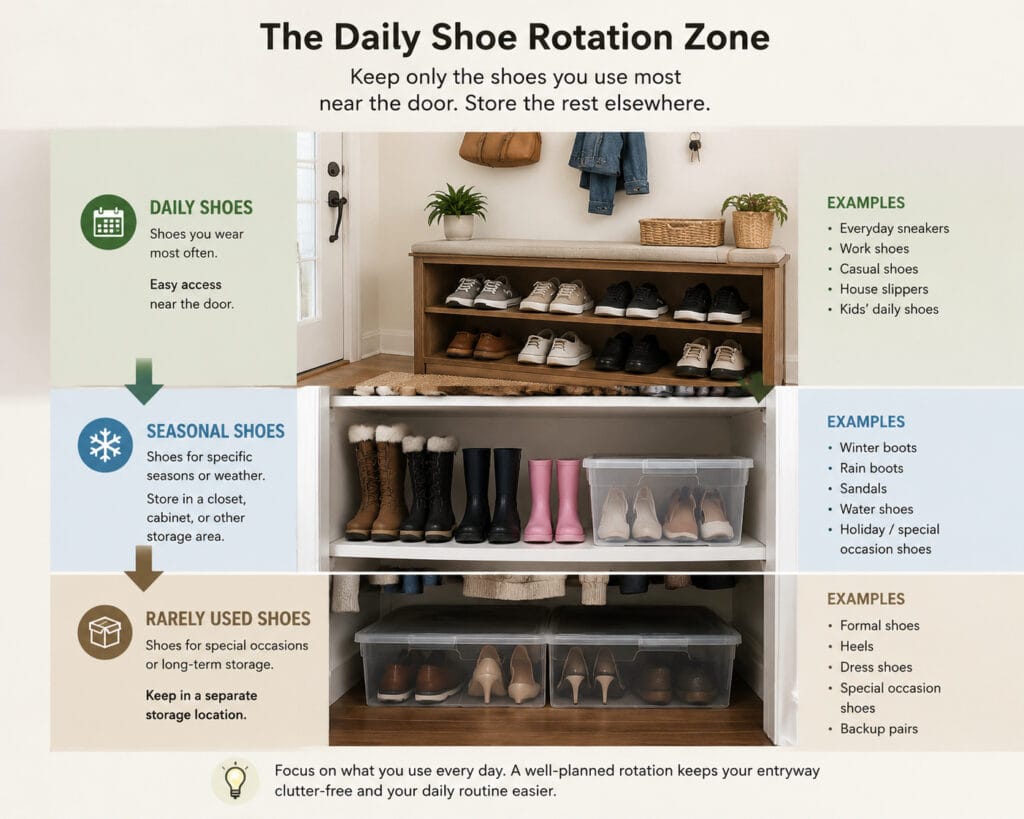
A small entryway often works better when it only stores the shoes that belong there.
When storage space is limited, it naturally encourages better organization and prevents the entrance from becoming a dumping area.
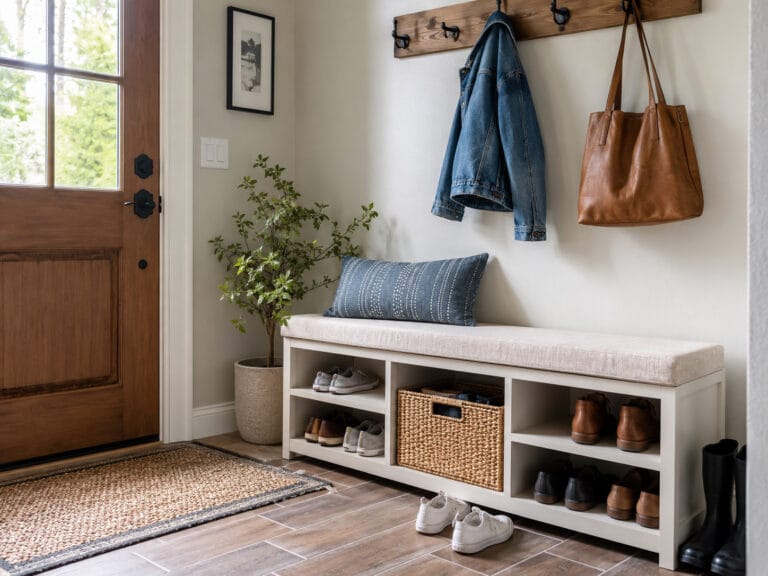
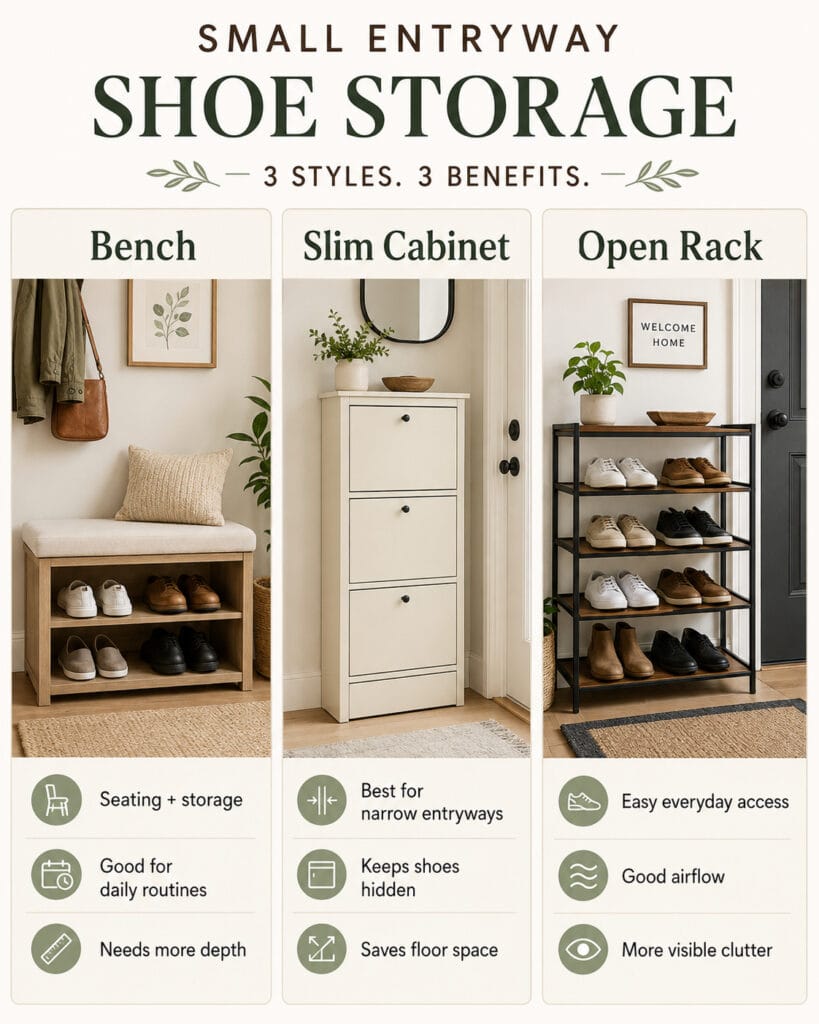
Storage Bench: Seating and Shoe Storage Together
A storage bench is one of the most practical solutions for households that need both seating and shoe organization.
It works especially well for:
- families getting ready in the morning;
- homes where people remove shoes immediately after entering;
- entrances where sitting down makes daily routines easier.
The biggest advantage is simple:
One piece of furniture solves two problems.
A storage bench provides:
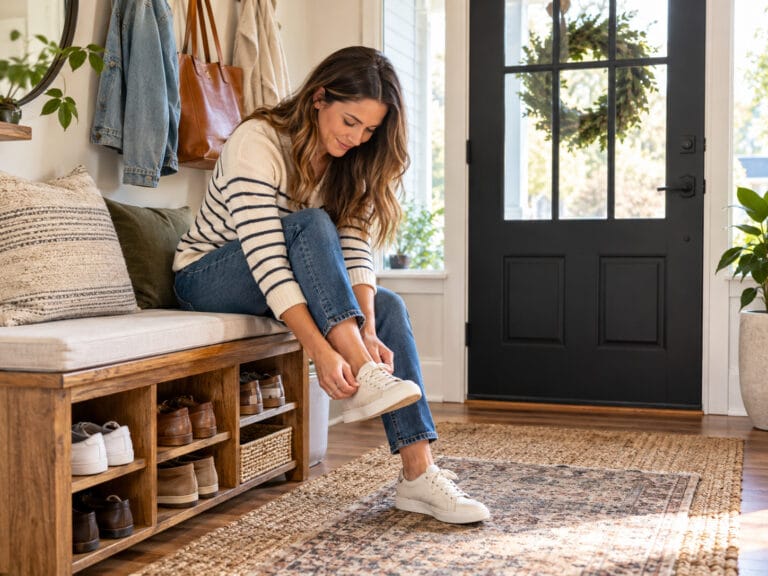
- a comfortable place to sit while putting on shoes;
- space underneath for shoes, baskets, or entryway accessories;
- a more finished look compared with loose shoe piles.
Common storage bench designs include:
- open shoe shelves;
- removable baskets;
- cubbies;
- lift-top storage compartments.
However, storage benches usually require more floor depth than slim shoe cabinets.
A deeper bench may provide better seating comfort and more storage, but it also extends further into the walking area.
Before choosing one, check:
- how much walking space remains in front of the bench;
- whether the front door can fully open;
- whether storage baskets or drawers can be used without blocking the entrance.
For more guidance on choosing the right bench size, see our guide to entryway bench dimensions and placement.
Slim Shoe Cabinet: Best for Narrow Entryways
When floor space is limited, a slim shoe cabinet is often one of the most efficient solutions.
These cabinets are designed to reduce how far furniture extends into the room, making them especially useful for:
- narrow hallways;
- apartment entrances;
- doors that open directly into living spaces.
The biggest benefit of a slim shoe cabinet is visual control.
Instead of seeing multiple pairs of shoes near the door, everything stays behind closed panels.
This can make a major difference when the entrance opens directly into:
- a living room;
- dining area;
- kitchen;
- open floor plan space.
However, “slim” does not always mean suitable.
Words like:
- slim;
- narrow;
- space-saving;
are marketing descriptions, not universal measurements.
Always check:
- outside depth;
- interior storage dimensions;
- compartment height;
- whether your shoes actually fit.
A shallow cabinet may work perfectly for everyday sneakers and flats but struggle with:
- tall boots;
- bulky outdoor shoes;
- oversized athletic shoes.
The best small entryway shoe storage is not the one that looks smallest online.
It is the one that fits your real shoes while protecting your walking space.
Open Shoe Rack: Easy Access for Everyday Shoes
Open shoe racks are one of the simplest entryway storage solutions.
Their main advantage is convenience.
There are no doors to open and no drawers to pull. Shoes can be removed and returned in seconds.
Open racks work especially well for:
- busy households;
- families with children;
- mudrooms;
- garage entry areas.
Benefits include:
- quick access;
- simple organization;
- better airflow around footwear;
- lower cost compared with enclosed cabinets.
However, open storage has one major disadvantage:
Everything remains visible.
In a small entryway, several pairs of shoes sitting on an open rack can quickly make the space feel crowded.
A practical approach is combining storage types:
- open storage for daily shoes;
- closed storage for less frequently used footwear.
This creates convenience without allowing the entrance area to become visually overwhelming.
Closed Shoe Storage: Cleaner Look, More Planning
Closed shoe storage is popular because it creates a cleaner and calmer entryway appearance.
It works especially well when the front door is visible from the main living space.
By hiding shoes behind doors, cabinets help reduce:
- visual clutter;
- dust exposure;
- the feeling of a crowded entrance.
However, closed storage requires more planning.
Consider Airflow
Shoes exposed to rain, mud, or outdoor conditions should have time to dry before being placed inside a fully enclosed cabinet.
For homes in rainy or snowy climates, a small open drying area can be useful before storing footwear away.
Check Real Capacity
A large-looking cabinet does not always provide large usable storage.
Internal space can be reduced by:
- thick panels;
- shelves;
- hardware;
- drawer mechanisms.
Always consider actual storage space, not only outside dimensions.
Check Opening Space
Doors and drawers need room to operate.
A cabinet may fit perfectly when closed but become inconvenient when:
- doors block the walkway;
- drawers extend into the main entrance path;
- nearby doors cannot open fully.
Storage should work during everyday use, not just look good when untouched.
Vertical Shoe Storage: Use Wall Space Instead of Floor Space
Small entryways often have limited floor space but unused wall space.
Vertical storage can increase organization without making the walking area narrower.
Common options include:
- tall narrow cabinets;
- wall-mounted shoe organizers;
- door-mounted storage;
- vertical shelving towers.
This approach works particularly well for apartments or homes where the entrance opens directly into another room.
A small wall area near the door can become a complete landing zone:
- shoes below;
- hooks for jackets and bags;
- a shelf for keys and small items.
The goal is not filling every inch of wall space.
Too much vertical storage can make a small entrance feel like a storage corridor.
Good vertical organization adds function while keeping the area open.
Shoe Storage Without a Dedicated Entryway
Not every home has a traditional foyer.
Many apartments and smaller homes open directly into:
- a living room;
- kitchen;
- hallway;
- dining area.
In these layouts, the goal is not creating a separate room.
The goal is creating a landing zone.
A landing zone gives everyday items a predictable place when you come home.
A simple setup may include:
Slim shoe cabinet
Defines the entrance area without taking much floor space.
Compact storage bench
Provides seating while visually separating the doorway area.
Wall hooks and shelves
Creates a place for:
- keys;
- bags;
- jackets;
- pet accessories.
A successful small entryway does not need more furniture.
It needs the right place for the things people naturally drop when they walk through the door.
For more small-space layout ideas, see our guide to small entryway ideas.
How Deep Should Shoe Storage Be?
Depth is one of the most important considerations in a small entryway.
A deeper storage unit may provide more capacity, but it also takes away valuable walking space.
Different storage types balance depth differently:
| Storage Type | Main Advantage |
|---|---|
| Slim shoe cabinet | Saves floor space |
| Storage bench | Adds seating comfort |
| Open rack | Flexible access and airflow |
The right choice depends on:
- available entryway width;
- number of daily shoes;
- whether seating is needed;
- how much walking space must remain.
A shoe storage solution should support your routine, not make the entrance harder to use.
For a deeper discussion about cabinet dimensions, see our future guide on how deep an entryway shoe cabinet should be.
Choose Shoe Storage Based on Shoe Type
Not all shoes need the same type of storage.
Choosing based on shoe style can prevent wasted space.
| Shoe Type | Storage Consideration |
|---|---|
| Sneakers | Most cabinets and racks work well |
| Casual shoes | Easy to store in almost any system |
| Tall boots | Need extra vertical space |
| Outdoor shoes | Benefit from drying airflow |
| Large athletic shoes | May require wider compartments |
| Kids’ shoes | Lower storage makes access easier |
For example:
A slim shoe cabinet may be perfect for everyday sneakers but frustrating if your household regularly wears tall winter boots.
An open rack may work better for children because shoes are easier to reach and return.
The best storage system matches the shoes your family actually wears.
Match Shoe Storage to Your Daily Routine
The best entryway shoe storage is not only about furniture.
It is about habits.
Ask:
- Do people sit down to put on shoes?
- Are shoes removed immediately after entering?
- Are children responsible for putting away their own shoes?
- Does the entrance stay visible from the living area?
- Are outdoor shoes often wet or dirty?
A family leaving the house every morning may value quick access.
A small apartment may prioritize hidden storage.
A household with children may need simple, reachable storage.
Storage works best when it supports the way people already live.
Common Entryway Shoe Storage Mistakes
Choosing only by appearance
A beautiful cabinet that blocks movement or does not fit your shoes will quickly become frustrating.
Storing every shoe near the entrance
The entryway should support daily routines, not become the home’s entire shoe closet.
Ignoring furniture depth
A few extra inches of depth can significantly reduce comfort in a narrow entrance.
Forgetting door clearance
Furniture must work with the front door, not only fit against the wall.
Closing wet shoes immediately
Outdoor footwear often needs drying time before enclosed storage.
Quick Entryway Shoe Storage Fit Check
Before purchasing any shoe storage furniture, try this simple test:
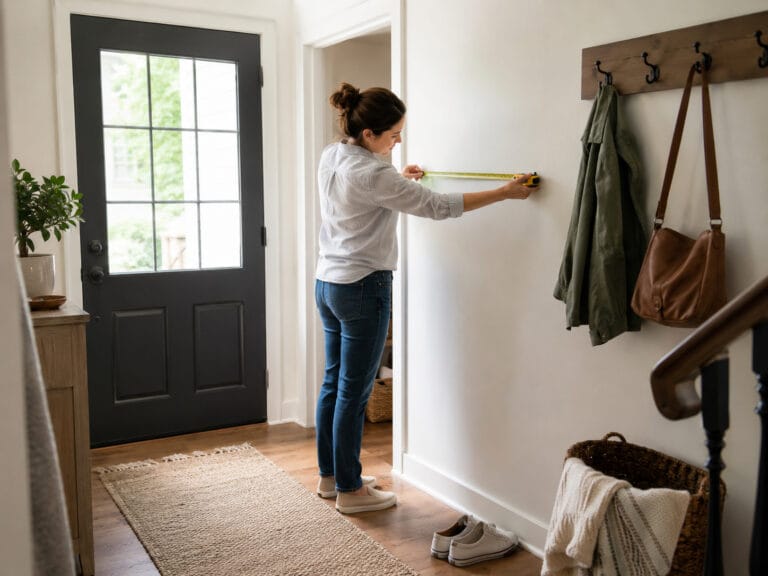
- Measure the available wall space.
- Mark the furniture footprint with painter’s tape.
- Walk through the entrance normally.
- Open the front door completely.
- Sit down if you are considering a bench.
- Test cabinet doors, drawers, or baskets.
- Place your everyday shoes in the marked area.
If the taped outline already feels crowded, the real furniture will usually feel even larger once shoes and daily items are added.
Frequently Asked Questions
What Is The Best Shoe Storage For A Small Entryway?
The best solution depends on your space and habits. Slim cabinets work well for narrow entrances, storage benches help when seating is needed, and open racks provide quick everyday access.
How Many Shoes Should You Keep Near The Front Door?
Most small entryways work better when they store frequently used shoes rather than the entire household shoe collection.
Is A Shoe Cabinet Better Than An Open Shoe Rack?
Neither option is always better. Cabinets provide a cleaner appearance, while open racks offer faster access and better airflow.
What Is The Best Shoe Storage For An Apartment Entrance?
Slim cabinets, vertical storage, and compact benches are often effective because they provide organization without taking much floor space.
How do you organize shoes in a small entryway?
Keep only frequently used shoes near the door and choose storage that fits your space, such as a slim cabinet, storage bench, or open shoe rack without blocking the walking path.
Conclusion: The Best Shoe Storage Fits Your Space and Your Routine
Small entryways do not need more storage.
They need better storage.
The right solution depends on how your household actually uses the entrance:
- choose a storage bench when seating and shoe storage are both important;
- choose a slim cabinet when floor space is limited;
- choose an open rack when convenience matters most;
- choose vertical storage when wall space is available.
The goal is not storing every shoe near the door.
The goal is creating an organized entrance where everyday shoes are easy to access, walking paths remain comfortable, and the space feels welcoming every time you come home.