

Outdoor cushions make a front porch more comfortable, but keeping them dry can become a daily chore. Large cushions are awkward to carry, indoor storage space may be limited, and moving them inside every evening is not always practical.
The solution is to make cushion protection part of your normal porch setup rather than a task you have to remember every day.
Depending on your porch layout and local weather, you may be able to leave cushions in a sheltered area between uses, store them in an outdoor storage box, or use a storage bench that keeps cushions close to your seating area.
The important part is knowing when cushions can reasonably stay outside, when they need protection, and how to avoid trapping moisture during storage.
This guide explains how to keep porch cushions dry with less daily effort, including practical storage choices for small front porches.
Table of Contents
Quick Answer: How Do You Keep Porch Cushions Dry?
For most households, the most practical approach combines weather protection, convenient storage, and proper drying after rain.
| Method | Best For | Main Consideration |
|---|---|---|
| Covered porch | Everyday seating in a sheltered area | Wind-driven rain and humidity can still cause moisture |
| Outdoor storage box | Cushions removed frequently | Check the usable interior dimensions and weather protection |
| Storage bench | Small porches that need extra seating | Confirm that the storage compartment fits your cushions |
| Furniture covers | Larger seating arrangements | Covers need to fit properly and should not trap excessive moisture |
| Air-drying routine | Cushions exposed to rain or heavy moisture | Allow damp areas to dry before enclosed storage |
A covered porch can reduce direct rain exposure, but it does not guarantee that cushions will stay dry.
The best setup is one that reduces unnecessary exposure while making it easy to put cushions away when conditions call for it.
1. Check How Much Weather Your Porch Actually Gets
Before buying storage, observe where moisture reaches your porch.
Two homes may both have covered front porches, yet their cushions can experience very different conditions because of roof depth, porch orientation, wind direction, and drainage.

Covered vs. Open Porches
A covered porch can reduce direct rainfall and sunlight. If the seating area is well sheltered, cushions may be able to remain outside between uses during suitable weather.
An open porch provides much less protection. If rain reaches the seating area directly, storing cushions when they are not being used is generally the more practical approach.
Even on a covered porch, check for:
- Rain blowing sideways through open sides.
- Water dripping from the roof edge or a downspout.
- Morning dew or persistent dampness.
- Splashing from wet concrete or deck boards.
- Moisture trapped between cushions and furniture frames.
If possible, observe the porch after a rainstorm and again the following morning. This helps identify areas that stay damp longer than others.
Practical tip: Move cushions toward the most sheltered part of the porch, but do not place them directly under a roof drip line or where runoff collects.
2. Can Porch Cushions Stay Outside Overnight?
There is no universal answer. It depends on the cushion construction, weather exposure, and how quickly the materials dry.
| Conditions | Practical Approach |
|---|---|
| Dry weather and a well-sheltered porch | Cushions may be left in place between uses |
| Rain in the forecast | Move cushions to protected storage before the rain arrives |
| Wind-driven rain | Use storage rather than relying on the roof alone |
| Humid weather with persistent morning moisture | Check cushions regularly and allow trapped moisture to escape |
| Winter or extended periods without use | Clean, dry, and store cushions according to the manufacturer’s instructions |
Outdoor-rated fabric does not automatically mean that the entire cushion is waterproof. The fabric, seams, filling, and cushion construction can respond differently to moisture.
For example, Sunbrella’s official upholstery care guide explains that its fabrics resist mildew growth, but dirt and other substances left on the fabric can still contribute to mildew.
The useful distinction is between a cushion that can tolerate normal outdoor conditions and one that can remain wet or damp indefinitely.
3. Choose the Right Cushion Storage Solution
The best storage method depends on how often you use your porch, how many cushions you have, and how much space is available.
Outdoor Storage Box: Best for Frequently Used Cushions
An outdoor storage box is a practical choice when you regularly remove cushions from rocking chairs, porch chairs, or other outdoor seating.
It keeps cushions together and close to the furniture, making it easier to put them away before a storm.
Before choosing a box, check four things:
- Interior dimensions: Measure your largest cushion, including its thickness. Exterior dimensions and advertised capacity do not tell you exactly how much usable space is inside.
- Access: Make sure the lid opens easily without hitting the front door, nearby chairs, or the walking path.
- Weather protection: Check the manufacturer’s description of rain resistance and intended use. Do not assume every outdoor box is fully waterproof.
- Storage conditions: Follow the product instructions and put away cushions only when they are sufficiently dry.
A large box is not necessarily the best option. For everyday use, a conveniently placed box that fits your cushions is often more practical than a larger one that crowds the porch.
Explore Porch Storage options if you need a dedicated place for outdoor accessories.
Storage Bench: Best for Small Front Porches
A storage bench combines seating and storage in one piece of furniture. It can be useful when there is not enough room for both a separate bench and a large storage box.
Before choosing one, check whether:
- The compartment fits the cushions you actually use.
- Cushions can be placed inside without excessive folding or compression.
- The lid can open without blocking the entrance.
- The bench leaves enough room to walk past it comfortably.
A storage bench is especially practical when you want to keep the porch organized without adding another large object.
However, its internal compartment may be smaller than expected. Measure the usable space rather than relying on the overall dimensions of the furniture.
Furniture Covers: Best for Larger Seating Areas
Furniture covers can help protect outdoor sofas, multiple chairs, and larger seating arrangements from rain, dust, and falling debris.
For everyday cushion management, however, a cover may be less convenient than a dedicated storage box. You may still need to remove the cushions before covering the furniture, depending on the cushion materials, cover design, and manufacturer’s recommendations.
A practical combination is to store loose cushions separately and use a properly fitted cover to protect the furniture when appropriate.
When choosing a cover, check its fit, fastening system, drainage, and ventilation features. Avoid assuming that a completely sealed cover is always better; moisture trapped underneath can create its own problems.
For a broader look at protecting outdoor seating, see Protecting Front Porch Furniture From Rain and Weather.
4. Never Put Wet Cushions Straight Into Enclosed Storage
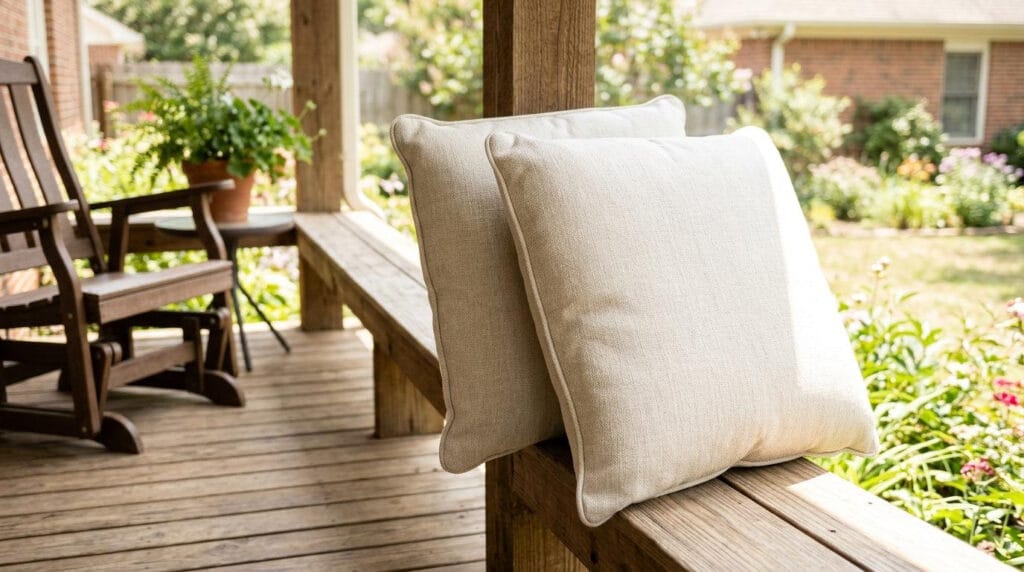
One of the most important rules is simple:
Let damp cushions dry before placing them in enclosed storage.
A storage box can help shield cushions from new rain, but it cannot remove moisture already trapped in the fabric or filling.
Putting a wet cushion into a closed container can prolong damp conditions and contribute to unpleasant odors or mildew.
After rain or heavy moisture, follow this routine:
- Remove the cushions from the furniture. This exposes the surfaces that normally sit against the seat or backrest.
- Remove excess water. Shake off loose water or gently blot the surface with a clean towel.
- Improve airflow. Stand cushions on their sides or separate them so air can circulate around them.
- Check hidden areas. Pay particular attention to the underside, seams, piping, and thick sections.
- Allow sufficient drying time. Do not rely on a dry-looking outer surface if the filling still feels damp.
- Store only when sufficiently dry. Follow the cushion manufacturer’s cleaning and storage instructions.
POLYWOOD’s official fabric care guidance specifically recommends standing cushions on their sides to help them dry faster and storing them in a dry place when not in use.
The U.S. Environmental Protection Agency also emphasizes moisture control as a central part of mold prevention. Its general guidance on wet materials is useful background, although it does not establish a universal drying time for every type of outdoor cushion. See the EPA’s mold prevention guidance.
If cushions remain damp inside, give them more time and airflow before putting them away.
5. Where Should You Put Your Cushion Storage?
The storage location affects both convenience and protection.
Keep It Close to the Seating Area
If you can put cushions away in a few steps, the routine is easier to maintain. A storage solution that requires carrying everything through the house or garage may become inconvenient over time.
Avoid Roof Drip Lines and Drainage Problems
Do not place storage directly beneath a roof edge where water regularly drips, beside a downspout that discharges heavily, or in a low spot where water collects.
Even a storage product designed for outdoor use benefits from sensible placement.
Keep the Entrance Clear
A front porch still needs to function as an entrance. Make sure the storage box or bench does not interfere with the door swing, steps, or normal walking route.
This is particularly important on small porches, where adding storage can quickly make the area feel crowded.
6. Small Front Porch? Balance Storage With Walking Space
On a compact porch, the biggest storage solution is not always the best one.
Think about the layout in this order:
- Keep the entry and walking route usable.
- Position the seating where it is comfortable to use.
- Add cushion storage that fits the remaining space.
- Leave decorative accessories until the essentials are in place.

A storage bench may work better than a separate deck box when you also need seating. If you prefer a storage box, compare its footprint and lid clearance before deciding where it will go.
Also consider how you will use the space when the storage lid is open. A box that fits on the floor may still be inconvenient if opening it blocks the door or forces someone to step into the main walking path.
For more layout ideas, see Small Front Porch Ideas.
7. A Simple Routine for Everyday Cushion Care
You do not need to perform a full cleaning routine every evening. Focus on the conditions that make moisture management necessary.
After Rain
Remove cushions from the furniture if they have become wet. Let them drain and dry with adequate airflow before storage.
Before a Storm
If the forecast calls for heavy rain or strong wind, move cushions to a protected location before the weather arrives.
During Humid Periods
Check cushions for persistent dampness, especially where they touch the furniture frame or where several cushions are stacked together.
Before Seasonal Storage
Clean cushions according to the manufacturer’s instructions and allow them to dry thoroughly. Choose a dry storage location and avoid trapping residual moisture in plastic bags or closed containers.
For any cleaning treatment, use the cushion manufacturer’s recommended method rather than assuming every outdoor fabric can tolerate the same detergent, bleach, or washing process.
HomyEntry Porch Cushion Storage Fit Check
Before settling on a storage method, check these six points:
- Weather exposure: Is the porch covered, partially sheltered, or fully exposed?
- Use frequency: Do you use the cushions daily or only occasionally?
- Storage capacity: Can all the cushions fit without being forced into the compartment?
- Ease of access: Is the storage close enough to use consistently?
- Drying conditions: Can damp cushions dry fully before being enclosed?
- Available space: Can you still open the door and move around comfortably?
The best solution is not necessarily the largest box or the most expensive cover. It is the one that fits your porch and makes regular cushion care easy.
Common Mistakes to Avoid
Assuming a covered porch is completely weatherproof. Wind-driven rain, roof runoff, and persistent moisture can still affect cushions.
Choosing a storage box based only on gallon capacity. Check usable interior dimensions and lid clearance.
Putting damp cushions into closed storage. Give them enough time and airflow to dry.
Buying more storage than the porch can accommodate. Protecting cushions should not make the entrance difficult to use.
Ignoring the manufacturer’s care instructions. Outdoor fabrics and cushion fillings vary, so cleaning and storage methods should match the product.
Final Recommendation
You do not necessarily need to bring porch cushions inside every day to keep them in good condition.
Start by reducing direct weather exposure, then choose a convenient storage box or storage bench if your porch needs dedicated cushion storage. Use furniture covers where they make sense, and allow damp cushions to dry before putting them away.
The key is to build a routine around your actual porch conditions rather than relying on a roof, a cover, or a storage box to solve every moisture problem.
A practical cushion setup should protect what needs protection without making everyday porch use more work than it needs to be.
Frequently Asked Questions
1. Can I leave porch cushions outside overnight?
Yes, in suitable conditions. Cushions may be left on a well-sheltered porch during dry weather, but wind-driven rain, morning dew, and high humidity can still make them damp. Check your local forecast and the cushion manufacturer’s care instructions, and store cushions when wet weather is expected.
2. Can I put wet porch cushions in an outdoor storage box?
No. Allow wet cushions to drain and dry thoroughly before placing them in enclosed storage. Trapped moisture can contribute to musty odors and mildew. Remove cushions from the furniture, separate them to improve airflow, and check the thicker areas before storing them.
3. Do outdoor storage boxes keep porch cushions dry?
Outdoor storage boxes can help protect cushions from direct rain and other outdoor debris, but their level of weather protection varies by design. Check the manufacturer’s specifications, inspect the lid and drainage design, and place the box away from roof runoff and areas where water collects.
4. Is a storage bench better than a deck box for porch cushions?
A storage bench is often a better choice for a small porch where you need both seating and storage. A deck box may be more suitable when you need a separate compartment for several cushions or larger items. Compare the usable interior dimensions and make sure the storage solution does not block the entrance or walking path.
5. Do furniture covers keep outdoor cushions dry?
Furniture covers can help reduce exposure to rain, dust, and debris, but they do not guarantee that cushions will stay dry. Moisture may enter around the edges or become trapped underneath. Follow the cover manufacturer’s instructions, allow damp cushions to dry, and consider storing removable cushions separately when heavy rain is expected.
6. How can I dry porch cushions quickly after rain?
Remove the cushions from the furniture, shake off excess water, and gently blot wet surfaces with a clean towel. Stand the cushions on their sides or separate them in a well-ventilated, sheltered area. Allow enough time for the filling and hidden areas to dry before storing them, following the manufacturer’s care instructions.