Choosing between an entryway bench and a shoe cabinet is not really about which piece of furniture looks better.
The better question is:
What problem do you need to solve near your front door?
Do you need a comfortable place to sit while putting on shoes?
Do you need to hide the pile of shoes that always collects near the entrance?
Is your entryway so narrow that every inch of floor space matters?
Both options can help organize your entryway, but they solve different everyday problems.
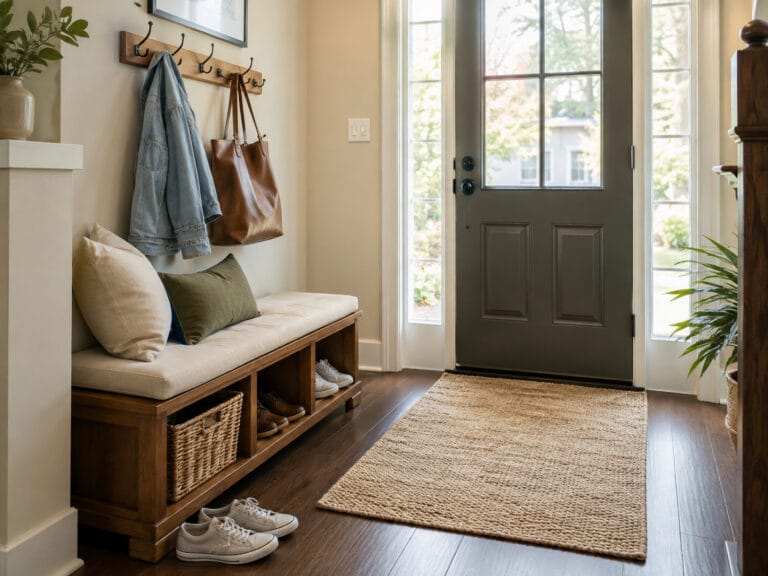
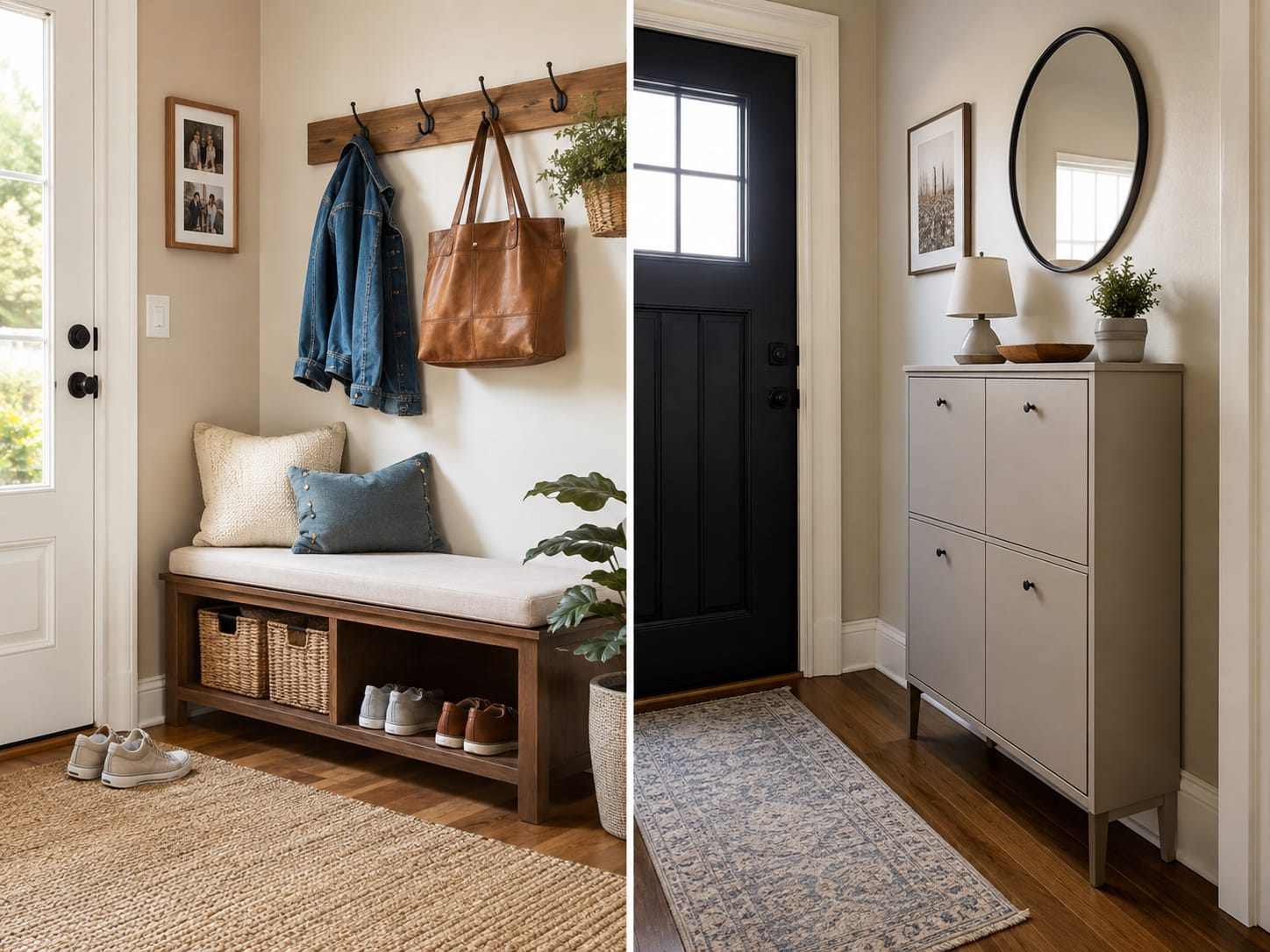
An entryway bench focuses on comfort, seating, and flexible storage. It works especially well for families, busy households, and anyone who prefers sitting down to put on shoes.
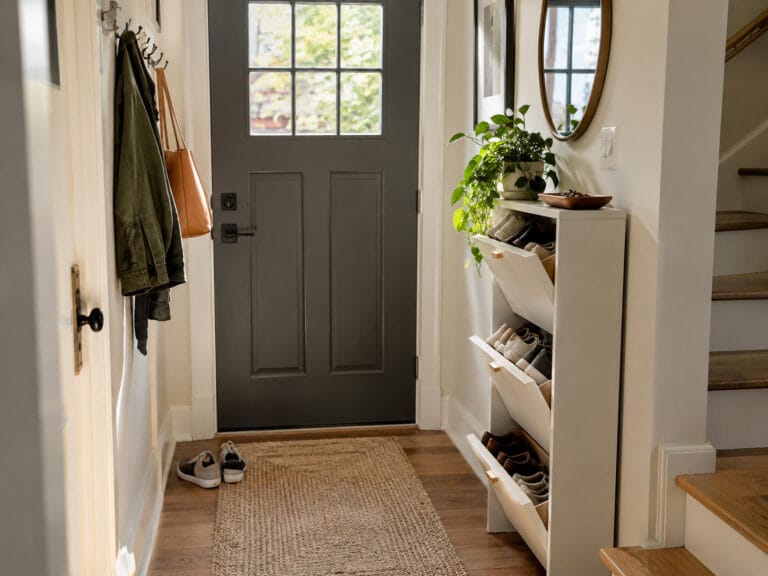
A shoe cabinet focuses on organization, hidden storage, and space efficiency. It is often the better choice for smaller entryways where keeping shoes out of sight is the main priority.
There is no universal winner.
The right choice depends on your entryway layout, daily habits, and available space.
Table of Contents
Quick Answer: Choose an Entryway Bench If… Choose a Shoe Cabinet If…
Choose an entryway bench if:
- You regularly sit down to put on or remove shoes;
- Your household includes children, older adults, or multiple people getting ready at the same time;
- You want seating and storage combined into one piece of furniture;
- Your entryway has enough depth for comfortable use;
- You prefer a warmer, more lived-in entryway style.
Choose a shoe cabinet if:
- Your entryway is narrow or has limited floor space;
- You want shoes hidden behind doors;
- Your front door opens directly toward a living room, hallway, or dining area;
- Your main goal is shoe organization rather than seating;
- You prefer a cleaner, more minimal look.
Before choosing either option, think about how your entryway actually works every day.
Entryway Bench vs. Shoe Cabinet: Key Differences
| Factor | Entryway Bench | Shoe Cabinet |
|---|---|---|
| Seating | Yes, designed for sitting | Usually no |
| Shoe storage | Flexible storage with shelves, baskets, or compartments | Designed mainly for shoe organization |
| Floor depth | Usually requires more depth | Slim models save floor space |
| Hidden storage | Some models provide closed storage | Usually offers enclosed storage |
| Shoe access | Easy, visible access | Requires opening doors or drawers |
| Best for | Seating + everyday entryway function | Maximum shoe organization |
| Ideal users | Families and frequent shoe changes | Small spaces and clean visual appearance |
Start With Your Real Entryway Problem
Many homeowners start this decision by comparing furniture styles.
But the more useful question is:
What keeps happening near your front door?
If shoes are constantly scattered across the floor, your biggest problem may be storage.
If family members struggle to put on shoes while standing, your biggest problem may be seating.
An entryway bench and a shoe cabinet are not competing versions of the same product. They are designed around different daily routines.
A good entryway setup usually focuses on the items that are used most often.
For many households, this means creating a daily shoe rotation zone near the door:
- Everyday sneakers;
- Work shoes;
- School shoes;
- Seasonal outdoor footwear.
Less frequently used shoes, special occasion footwear, and off-season items usually do not need to occupy the most valuable entryway space.
A smaller storage solution that matches your daily routine is often more practical than a large piece of furniture that becomes another place to collect clutter.
Space Needed: Depth Changes Everything
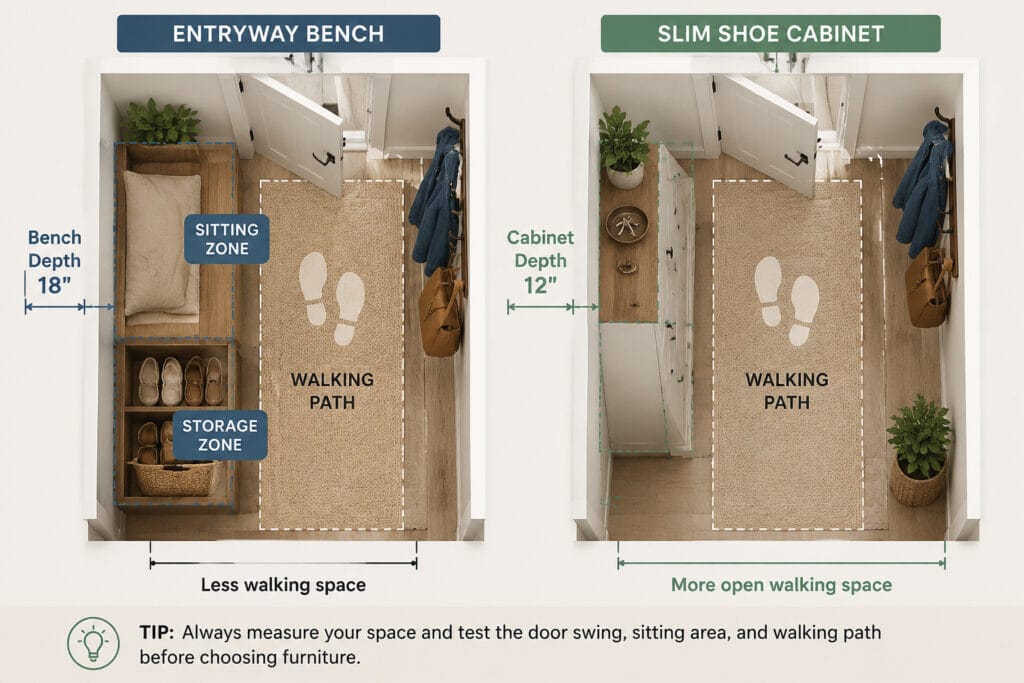
One of the biggest differences between an entryway bench and a shoe cabinet is how much floor space they use.
A piece of furniture may fit against a wall, but that does not always mean it will feel comfortable in daily use.
For detailed bench measurements, see our guide: Entryway Bench Size Guide.
Entryway Bench Space Requirements
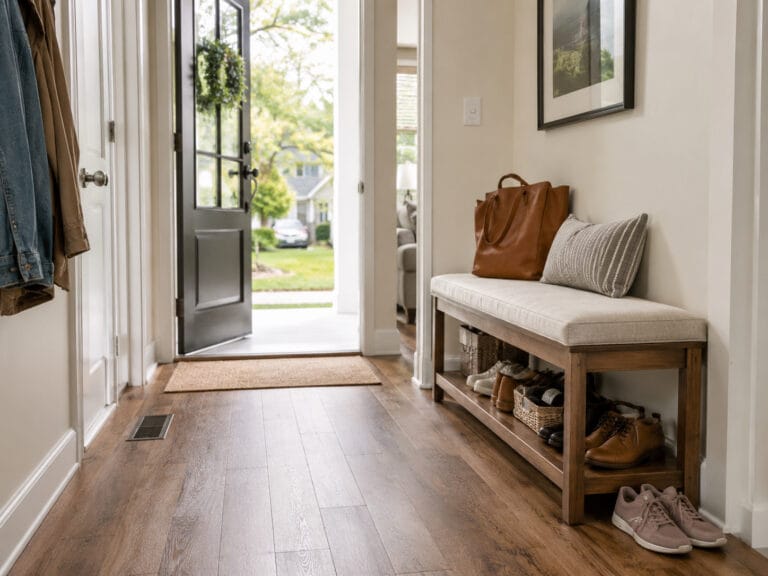
An entryway bench needs additional space because it is designed for sitting.
Besides the furniture footprint itself, you should consider:
- Leg and foot space when someone sits down;
- Walking space in front of the bench;
- Clearance needed for baskets, drawers, or storage compartments.
Many comfortable entryway benches are deeper than slim shoe cabinets because they need to support a practical sitting position.
A bench works especially well in:
- Larger entryways;
- Small foyers with extra floor depth;
- Homes where sitting down to change shoes is part of the daily routine.
However, in a narrow hallway, a deeper bench can quickly reduce the remaining walkway.
A useful question:
After placing the bench, can someone still walk through comfortably while another person is sitting down?
If not, the bench may be taking too much space.
Shoe Cabinet Space Requirements
A shoe cabinet is often designed around smaller footprints, especially slim models created for apartments and narrow entryways.
Typical slim shoe cabinets often use less floor depth than benches, which helps preserve walking space.
This makes them a strong choice for:
- Small apartments;
- Narrow hallways;
- Entryways that open directly into another room.
However, slim storage comes with trade-offs.
A shallow cabinet may not work well for:
- Large athletic shoes;
- Heavy outdoor footwear;
- Tall boots.
Before buying, check the internal storage dimensions, not only the outside measurements.
A cabinet may look spacious from the outside but lose usable capacity because of shelves, doors, and internal structure.
For more small-space storage ideas, see our guide: Entryway Shoe Storage Ideas for Small Spaces.
Storage Capacity: Which Holds More Shoes?
Storage capacity depends more on the design than the furniture category itself.
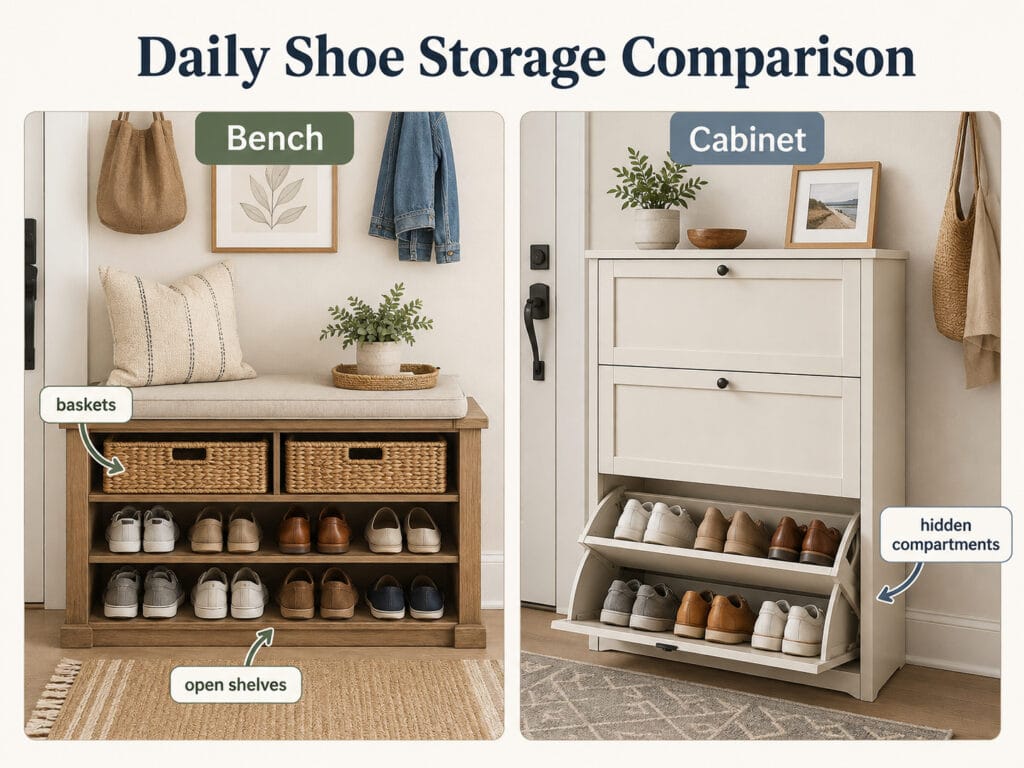
Entryway Bench Storage
An entryway bench can be surprisingly flexible.
Depending on the design, it may include:
- Open shoe shelves;
- Storage baskets;
- Hidden compartments;
- Space for bags, gloves, pet accessories, or outdoor items.
The advantage is versatility.
However, most benches are not designed to become a complete shoe storage system for an entire household.
They work best for:
- Daily shoes;
- Frequently used footwear;
- Entryway essentials.
Shoe Cabinet Storage
A shoe cabinet is designed specifically around footwear organization.
Its advantages include:
- Dedicated shoe compartments;
- Hidden storage;
- Cleaner appearance;
- Better separation between shoes and living areas.
If your biggest complaint is:
“Why are there always shoes everywhere near the door?”
A shoe cabinet is often the more effective solution.
It creates a clear place for shoes to return after use.
Seating: Do You Actually Need a Place to Sit?
This is often the deciding factor.
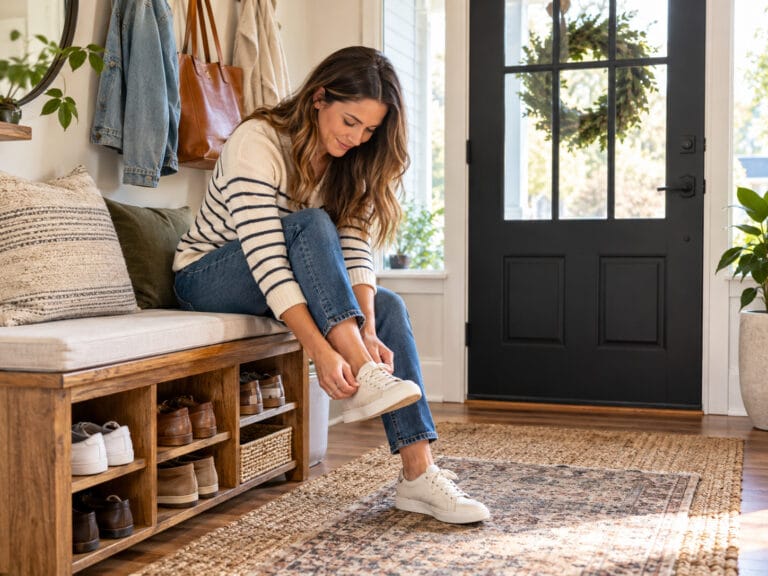
An entryway bench provides something a shoe cabinet usually cannot:
A place to sit.
For many households, this small feature changes the entire entry routine.
Children can sit down instead of balancing on one foot while putting on shoes.
Adults can comfortably remove boots or outdoor shoes.
Guests have somewhere to sit when entering the home.
If your family already has the habit of sitting down to change shoes, an entryway bench is not just decoration. It becomes part of the daily routine.
A shoe cabinet makes more sense when:
- Most people change shoes standing up;
- Seating is rarely needed;
- Storage efficiency is the priority.
Large Shoes and Boots: What Fits Better?
Different shoes create different storage challenges.
Sneakers and Casual Shoes
Both options usually work well.
Daily sneakers, running shoes, and casual footwear can fit into:
- Bench shelves;
- Shoe cabinet compartments;
- Open racks.
Tall Boots
Boots require more vertical space.
Some slim shoe cabinets may not have enough height for:
- Winter boots;
- Rain boots;
- Tall fashion boots.
Open shelving or adjustable cabinet interiors may work better.
Large Athletic or Outdoor Shoes
Oversized sneakers, hiking shoes, and work boots may require wider compartments.
Before choosing storage, measure the shoes your household actually wears most often.
A storage solution that fits small shoes but fails with your largest everyday footwear will quickly become frustrating.
Open vs. Closed Look: Which Style Fits Your Home?
The visual difference between benches and cabinets matters, especially in small homes.
Entryway Bench: More Open and Welcoming
A bench creates a warmer, more casual entryway feeling.
It pairs naturally with:
- Woven baskets;
- Wall hooks;
- Cushions;
- Decorative accessories.
The downside:
If shoes remain visible, the entryway can quickly look cluttered.
Shoe Cabinet: Cleaner and More Minimal
A closed shoe cabinet can immediately make an entryway feel more organized.
This is especially useful when:
- The front door faces the living room;
- Guests see the entry immediately;
- You prefer a cleaner visual style.
The trade-off is convenience.
Opening doors or drawers adds one extra step every time shoes are used.
Families vs. Couples: Different Homes Need Different Solutions
Families With Children
An entryway bench is often more practical.
A common setup is:
Bench + baskets + wall hooks
This creates a simple drop zone for:
- Shoes;
- Backpacks;
- Jackets;
- Everyday accessories.
The seating function also makes busy mornings easier.
Single or Two-Person Households
A shoe cabinet may be enough.
If only a few pairs of shoes stay near the door and seating is not important, a slim cabinet can provide better organization without adding unnecessary furniture.
Small Narrow Entryways: Which One Works Better?
For very narrow entryways, a shoe cabinet is often the safer choice.
A slim cabinet can organize shoes while preserving more walking space.
However, an entryway bench is still possible if:
- The hallway has enough width;
- You choose a shallow model;
- Sitting down to change shoes is a real priority.
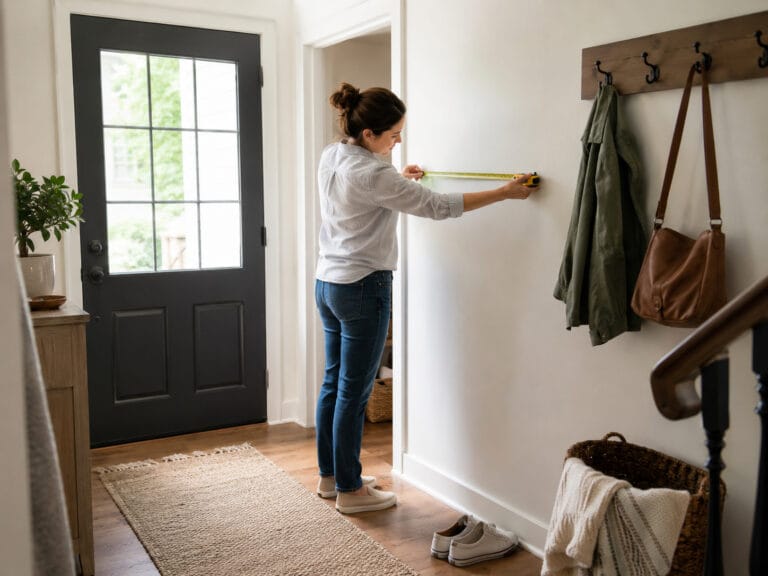
Before buying, try a simple painter’s tape test:
- Mark the furniture footprint on the floor;
- Walk through the entryway;
- Open the front door completely;
- Sit down and simulate changing shoes;
- Test storage doors or drawers.
A few minutes of testing can prevent choosing furniture that looks perfect online but feels too large at home.
For more measurement tips, see our guide: How to Measure Your Entryway Before Buying Furniture.
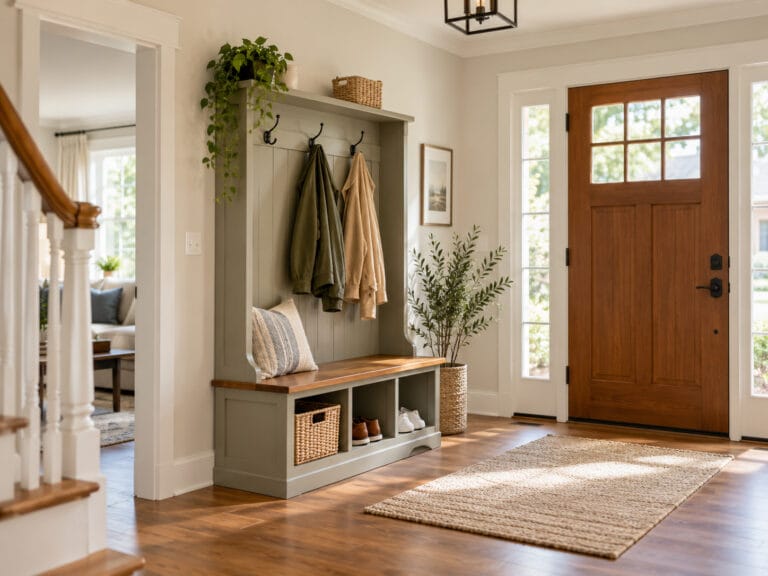
When a Bench With Shoe Storage Gives You Both
Sometimes the best solution is not choosing between a bench and a cabinet.
A storage bench with shoe compartments can provide:
- A place to sit;
- Daily shoe storage;
- A surface for bags or accessories;
- A more complete entryway setup.
This works especially well for homeowners who want a functional entryway without adding multiple furniture pieces.
However, remember:
More functions do not always mean better.
A storage bench that is too deep can still make a small entryway uncomfortable.
Simple Decision Checklist
Choose an entryway bench if:
✓ You sit down to change shoes regularly
✓ You need seating and storage together
✓ Your entryway has enough depth
✓ Your household uses the entrance frequently
Choose a shoe cabinet if:
✓ Your entryway is narrow
✓ You want shoes hidden away
✓ Floor space is limited
✓ Organization matters more than seating
The best choice is the one that supports your daily habits without making your entrance harder to use.
Frequently Asked Questions
Is an entryway bench better than a shoe cabinet?
It depends on whether you need seating, hidden storage, or a smaller footprint.
Is a shoe cabinet better for a small entryway?
A slim shoe cabinet is often better for narrow entryways because it uses less floor depth.
Can an entryway bench store shoes?
Yes, many entryway benches include shelves, baskets, or hidden storage for everyday shoes.
Do I need a bench in my entryway?
A bench is useful if your household regularly sits down to put on shoes.
Can I use both an entryway bench and shoe cabinet?
Yes, larger entryways can combine both for seating and organized shoe storage.
Final Thoughts: Entryway Bench or Shoe Cabinet?
An entryway bench and a shoe cabinet solve different problems.
A bench focuses on comfort, seating, and flexible entryway use. It is often the better fit for families, larger entryways, and homes where changing shoes is part of the daily routine.
A shoe cabinet focuses on organization, hidden storage, and space efficiency. It is often the better choice for narrow entrances, apartments, and homeowners who want a cleaner look.
Before buying, measure your available space and think about your busiest moments:
Someone entering the home.
Someone leaving.
Someone sitting down to change shoes.
Someone walking through at the same time.
The right entryway furniture should make those everyday moments easier — not create another obstacle near your front door.