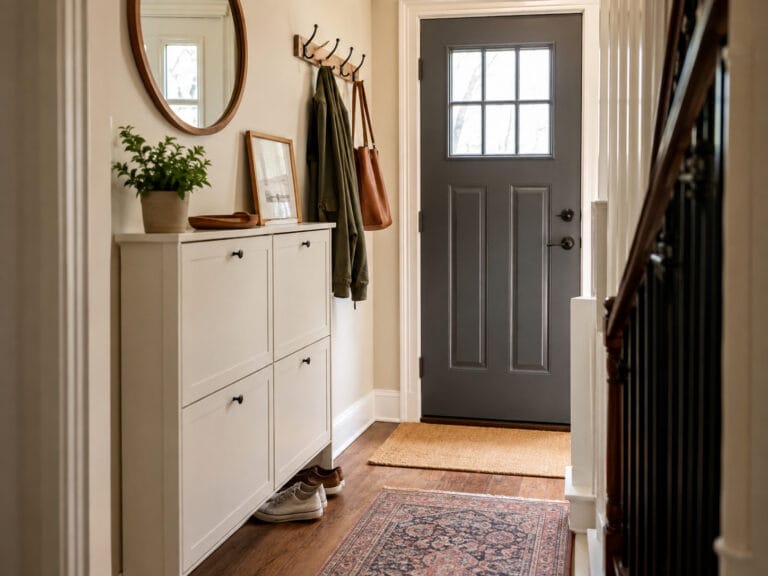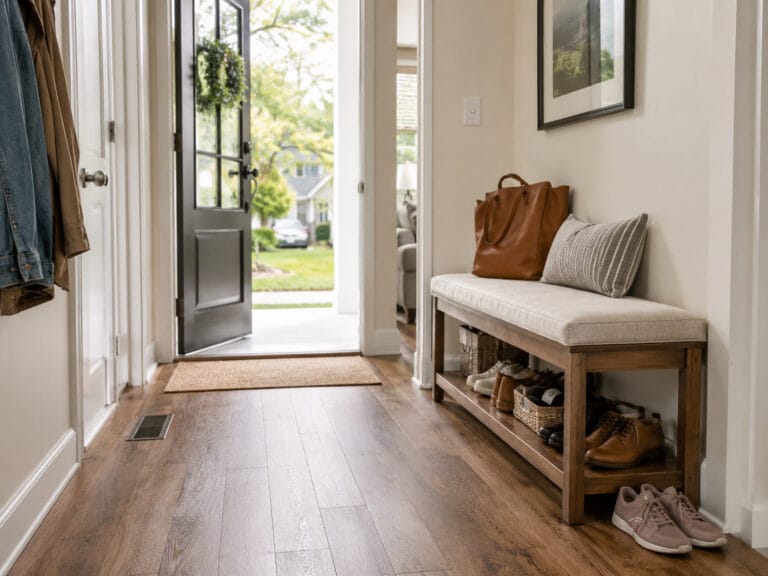
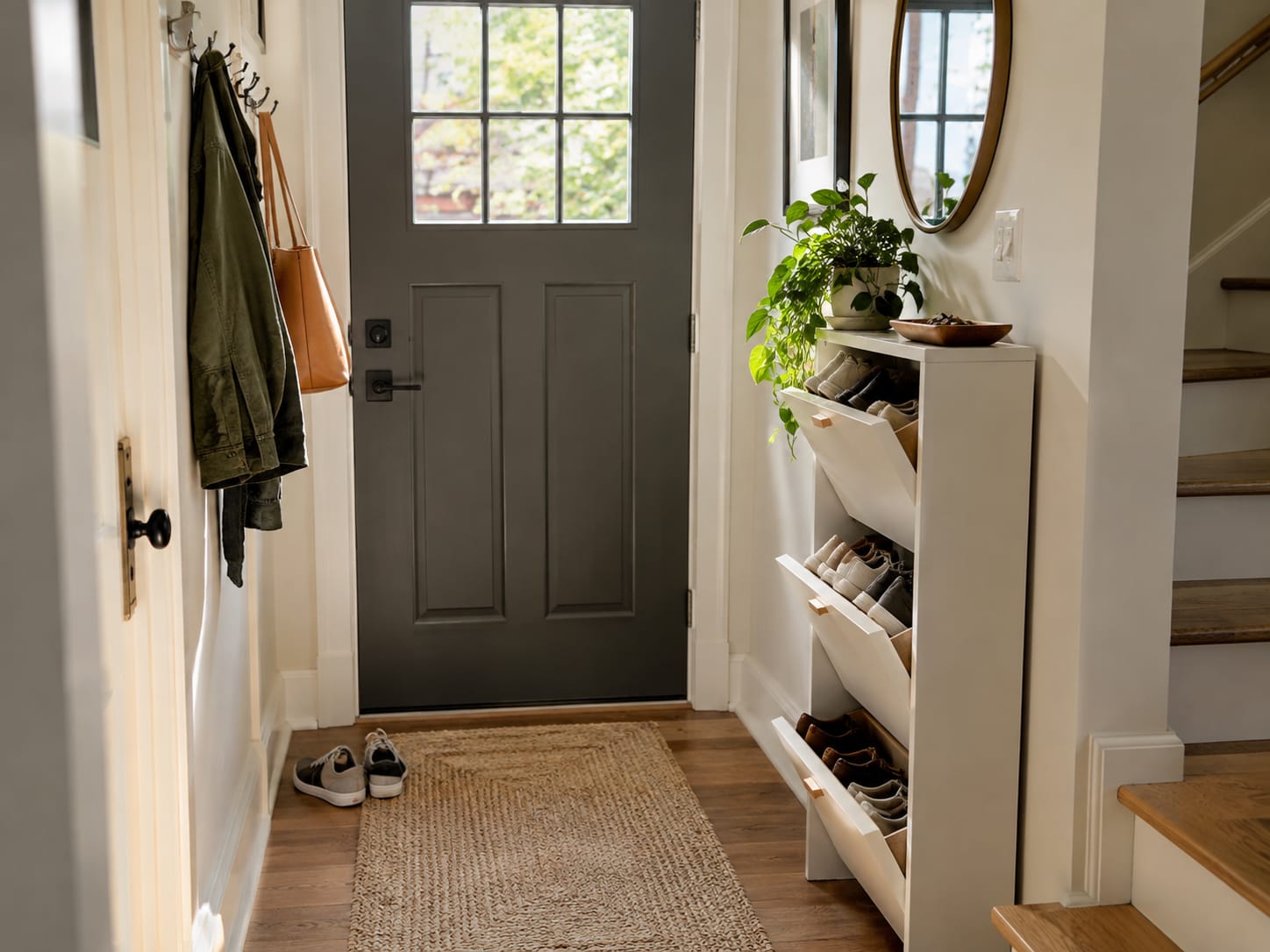
A shoe cabinet can be labeled for 12, 16, or even 24 pairs and still hold fewer shoes than you expect once you start using it.
The reason is simple:
“Pair capacity” is usually an estimate, not a guarantee for every shoe size and style.
A cabinet that comfortably holds 12 pairs of flats may hold noticeably fewer pairs of men’s sneakers, high-tops, ankle boots, work shoes, or bulky running shoes.
For an entryway, the more useful question is not:
“How many pairs does this cabinet claim to hold?”
It is:
“How many of my actual shoes will fit comfortably, and will they still be easy to store and retrieve?”
This guide explains what really determines shoe cabinet capacity, how flip-drawer cabinets compare with open shelves and shoe benches, and how to estimate realistic storage before you buy.
Table of Contents
Quick Answer: How Many Shoes Fit in an Entryway Shoe Cabinet?
There is no universal capacity for every shoe cabinet, but these ranges are useful for planning:
| Shoe Storage Type | Typical Planning Capacity | Best For |
|---|---|---|
| Small flip-drawer cabinet | 4–8 pairs | Tight entryways and everyday shoes |
| 2-drawer slim cabinet | 8–16 pairs | Small households and mixed footwear |
| 3-drawer cabinet | 15–24 pairs | Larger households or higher shoe volume |
| Entryway bench with shoe storage | 4–10 pairs | Daily shoes plus seating |
| Open shoe shelf | 6–15+ pairs | Easy access and flexible storage |
| Standard-depth closed shoe cabinet | 12–20+ pairs | Hidden storage where deeper furniture fits |
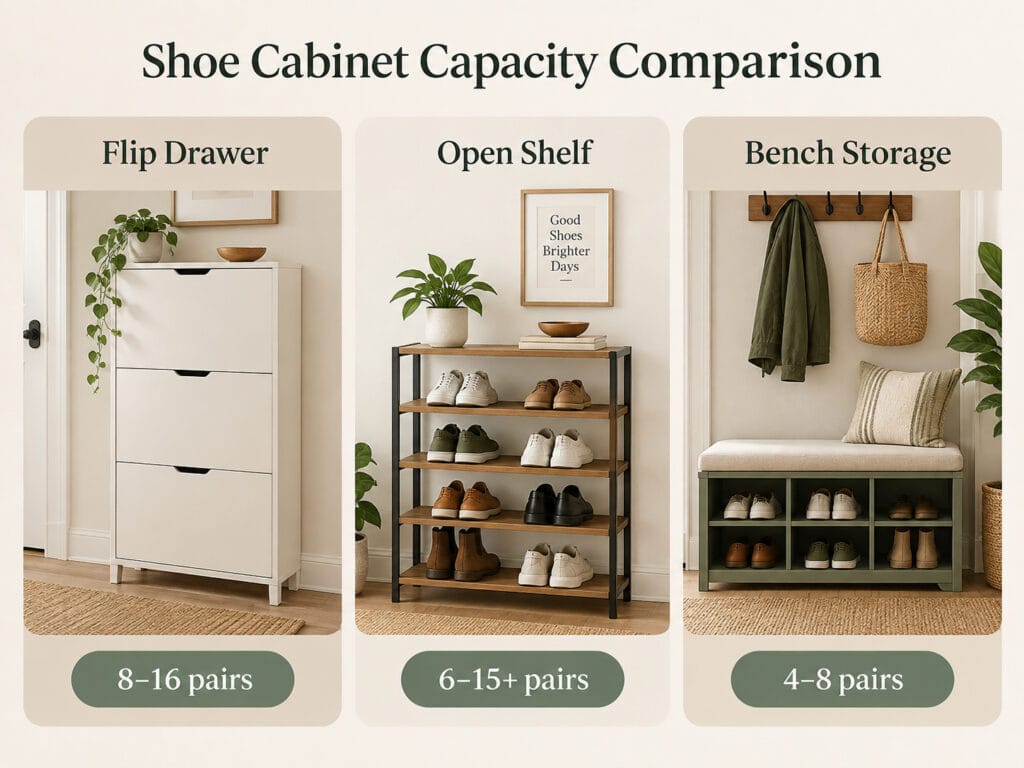
These are planning ranges, not standardized capacities.
Actual storage depends on:
- cabinet width and depth;
- usable interior space;
- shelf or drawer layout;
- shoe length and height;
- whether shoes sit flat, angled, or stacked;
- divider position;
- the mix of adult, children’s, and bulky footwear.
Two cabinets with similar outside dimensions can have very different usable capacity.
Why Advertised Shoe Capacity Often Differs From Real Life
Shoe cabinet product pages often use simple capacity labels such as:
- 8 pairs;
- 12 pairs;
- 16 pairs;
- 24 pairs.
Those numbers are useful for comparison, but they should not be treated as exact results for every household.
Capacity estimates often work best with relatively slim, low-profile shoes that can be arranged efficiently. Real entryways usually contain a mix of footwear, including:
- running shoes;
- work shoes;
- men’s sneakers;
- high-tops;
- ankle boots;
- children’s shoes.
A row that comfortably fits four pairs of flats may fit only three pairs of larger sneakers.
That does not necessarily mean the cabinet is poorly designed. It means the advertised pair count is best treated as a starting point, not the final answer.
What Actually Determines Shoe Cabinet Capacity?
Five factors matter most.
1. Usable Interior Width
Overall cabinet width is not the same as usable shoe-storage width.
Interior space may be reduced by:
- side panels;
- vertical dividers;
- drawer hardware;
- hinges;
- structural framing.
If capacity matters, look for interior shelf width or drawer width, not just the cabinet’s exterior dimensions.
A 32-inch-wide cabinet may offer noticeably less than 32 inches of usable storage inside.
2. Shoe Length
Longer adult shoes take up more room, especially in flip-drawer cabinets where footwear sits at an angle.
A cabinet that works well for smaller shoes may feel tight for:
- men’s sneakers;
- large athletic shoes;
- work shoes;
- hiking shoes.
For the most realistic estimate, measure the longest pair you actually expect to store.
3. Shoe Height
Height becomes important with:
- high-tops;
- ankle boots;
- thick running shoes;
- heels;
- platform shoes.
A compartment may have enough floor area but still lack enough vertical clearance.
This is one reason a cabinet advertised for 20 pairs may hold far fewer pairs once boots or high-top shoes are added.
4. Storage Angle
Flip-drawer cabinets store shoes at an angle rather than flat on deep shelves.
That is what allows them to use a shallower cabinet depth, which can be useful in:
- narrow entryways;
- hallways;
- apartments;
- small foyers.
But angled storage also means shoe length and toe-box height can affect fit more than they would on a flat shelf.
5. Divider Design
Some shoe cabinets use:
- fixed dividers;
- removable dividers;
- adjustable dividers.
If you regularly store bulky sneakers, high-tops, or ankle boots, removable or adjustable dividers can make a major difference.
How Many Pairs Fit in a Flip-Drawer Shoe Cabinet?
Flip-drawer cabinets are popular in small entryways because they can provide relatively high shoe capacity without projecting far into the room.
Instead of storing shoes flat on deep shelves, the drawers tilt the shoes at an angle.
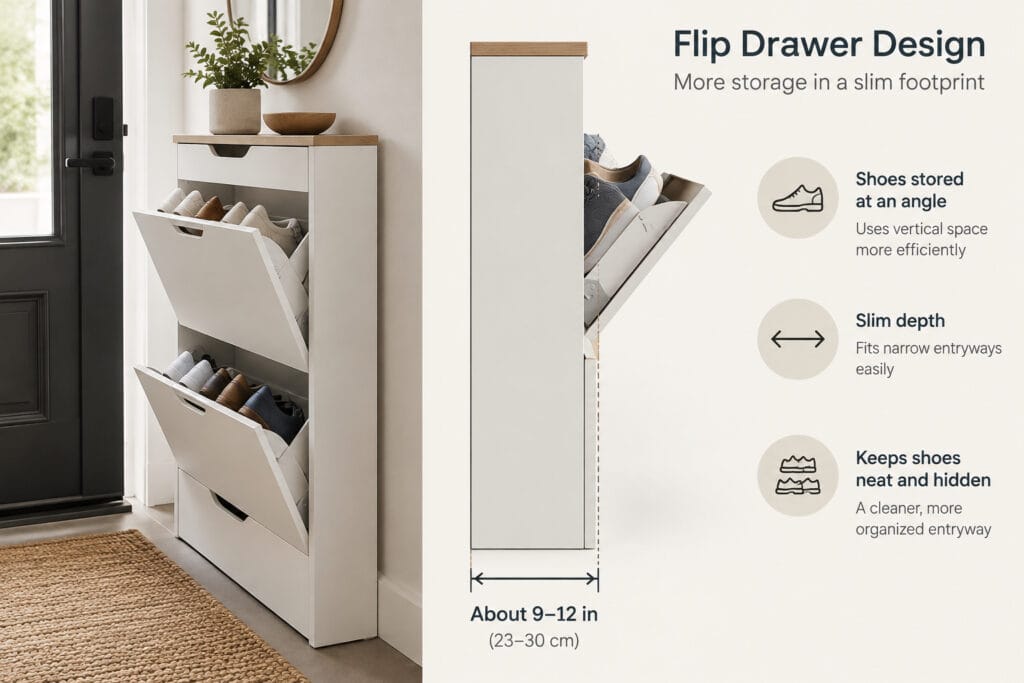
That makes them especially practical in:
- compact entryways;
- apartments;
- narrow halls;
- spaces near the front door where walkway depth matters.
But real capacity can vary considerably.
Two flip-drawer cabinets with similar exterior dimensions may hold different numbers of shoes because of differences in:
- drawer height;
- usable interior width;
- number of compartments;
- divider layout;
- shoe angle.
A cabinet advertised for 16 pairs may work well for low-profile shoes but hold fewer pairs if most of your footwear is bulky.
A better way to think about capacity is:
How many pairs fit comfortably in each drawer using the shoes you actually wear?
If a three-drawer cabinet realistically holds four pairs per drawer, your practical capacity is about 12 pairs, even if the listing claims more.
Browse our shoe storage cabinets for slim and space-saving entryway options.
Why Flip-Drawer Cabinets Work Well in Small Entryways
The main advantage of a flip-drawer cabinet is not simply capacity.
It is capacity relative to depth.
Traditional flat shoe shelves often need more front-to-back space because shoes sit horizontally. Flip drawers reduce that footprint by storing footwear at an angle.
That can make them especially useful where every inch of walkway matters.
For a narrow entryway, a shallower cabinet can often be more useful than a deeper cabinet with a higher advertised pair count.
The goal is not to maximize shoe storage at any cost.
It is to add useful storage without making the entrance harder to use.
Measure Your Largest Pair, Not Your Average Pair
A common mistake is planning around the smallest or most typical shoes in the household.
That often creates problems later.
Instead, identify the shoes that are hardest to store.
Measure:
- total shoe length;
- widest point;
- highest point;
- how much width one pair uses side by side.
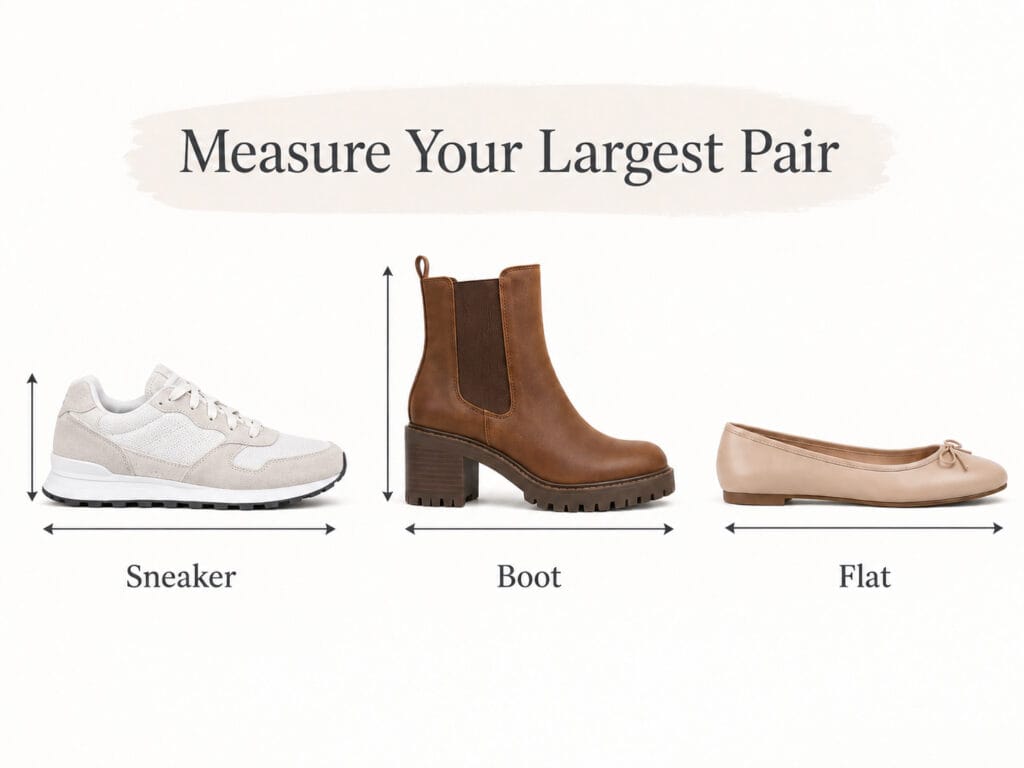
Good test pairs include:
- your largest men’s sneakers;
- high-tops;
- ankle boots;
- work shoes.
If the cabinet handles those comfortably, smaller shoes will usually be easier to fit.
This is more useful than relying on shoe size alone because two shoes with the same labeled size can have very different:
- outsole length;
- sole thickness;
- upper height;
- overall bulk.
A Simple Shoe Footprint Reference
You do not need a complicated shoe-size conversion chart to estimate cabinet fit.
A better approach is to think in terms of actual shoe footprint.
| Footwear Type | What Usually Matters Most |
|---|---|
| Flats | Low height and narrow profile |
| Low-top sneakers | Length and width |
| Men’s athletic shoes | Longer sole and wider toe box |
| High-tops | Length plus extra vertical clearance |
| Ankle boots | Length, height, and bulk |
| Work shoes | Width, sole thickness, and stiffness |
The more bulky footwear you own, the more conservative your capacity estimate should be.
Adult Shoes vs. Kids’ Shoes
The same cabinet can hold very different numbers of shoes depending on who uses it.
Children’s shoes are generally:
- shorter;
- narrower;
- easier to arrange efficiently.
Adult shoes often:
- take up more width;
- have thicker soles;
- require more vertical clearance.
So a cabinet advertised for 18 pairs may come close to that number when storing smaller shoes, but hold fewer pairs when filled with adult sneakers.
If the cabinet will be shared by adults and children, estimate capacity around the larger adult shoes first.
What About Boots and High-Tops?
Boots are where advertised shoe capacity often becomes least useful.
Standard flip-drawer cabinets are usually better suited to:
- sneakers;
- flats;
- loafers;
- low-profile casual shoes.
Ankle boots and high-tops may need:
- more vertical clearance;
- a removed divider;
- an adjustable shelf;
- a taller compartment;
- flat storage instead of angled storage.
If you regularly store boots, check whether the cabinet provides:
- removable internal dividers;
- adjustable shelves;
- taller lower compartments;
- open space near the bottom.
Do not assume a cabinet labeled for 20 pairs can also hold 20 pairs of boots.
It usually cannot.
Flip Drawer vs. Open Shelf vs. Entryway Bench
Different storage types use space differently.
| Storage Type | Main Strength | Main Limitation |
|---|---|---|
| Flip drawer | High capacity with shallow depth | Bulky shoes reduce real capacity |
| Open shelf | Easy visibility and access | Can look more cluttered |
| Entryway bench | Seating plus shoe storage | Lower total shoe capacity |
| Closed cabinet | Clean appearance | Fit depends heavily on interior layout |
Flip Drawer
Best when entryway depth is limited.
Choose it if you want:
- a slim profile;
- closed storage;
- relatively high capacity in a narrow footprint.
Open Shelf
Best when easy access matters most.
It works well for households that repeatedly wear the same few pairs of everyday shoes.
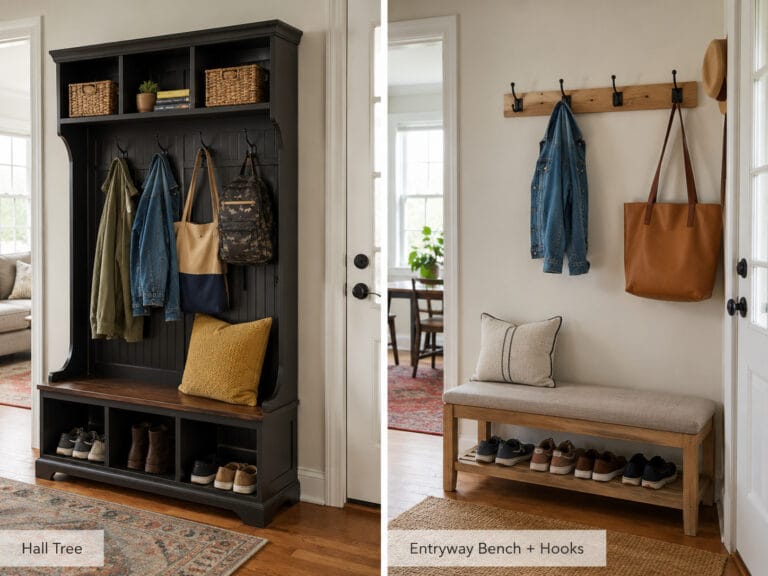
Entryway Bench
Best when you want both:
- a place to sit;
- storage for frequently worn shoes.
But do not expect the same total capacity as a tall dedicated shoe cabinet.
For a more detailed comparison, see our Entryway Bench vs. Shoe Cabinet guide.
How Many Shoes Fit on an Open Shelf?
Open shelves are easier to estimate because shoes usually sit flat.
A simple method is:
- Measure the usable shelf width.
- Measure how much width one pair needs.
- Count the usable shelf levels.
For example, if one shelf comfortably fits four pairs and the unit has three usable shelves, the practical capacity is about:
12 pairs
before accounting for boots or oversized shoes.
Open shelves are also more flexible because you can sometimes:
- angle shoes slightly;
- stagger pairs;
- place taller shoes on the top level.
The trade-off is that open storage can look more cluttered.
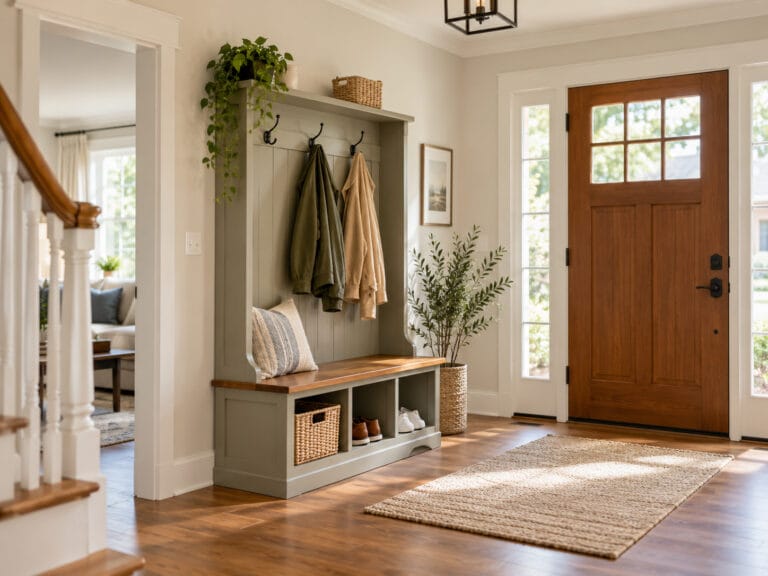
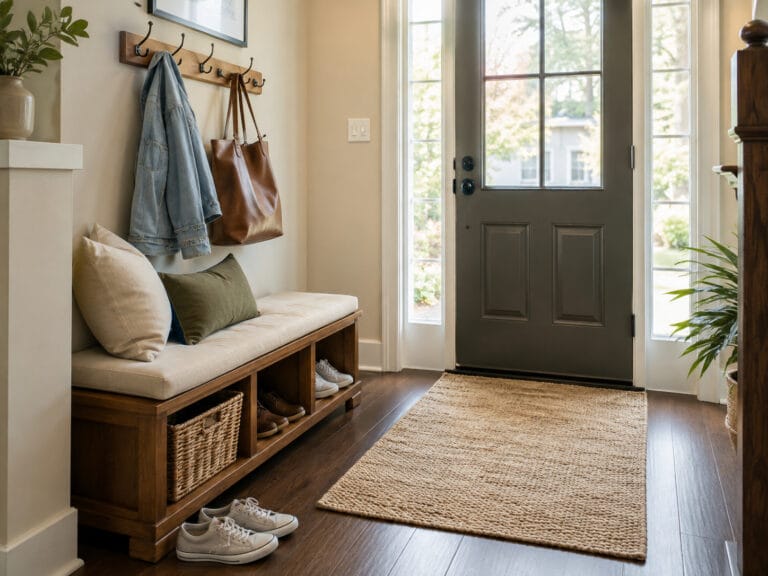
How Many Shoes Fit in an Entryway Bench?
Entryway benches usually sacrifice some shoe capacity in exchange for seating.
Typical storage layouts may include:
- one or two open shelves;
- cubbies;
- a lower rack;
- drawers.
A compact bench may hold around:
4–8 pairs
while a longer bench may hold:
8–10 pairs or more
depending on width and shelf layout.
Bench storage works best for:
- everyday shoes;
- frequently worn sneakers;
- slippers;
- a small household shoe rotation.
If you need to store 15–20 pairs, a dedicated shoe cabinet is usually more space-efficient.
Shoe Capacity Is Not the Same as Entryway Fit
A cabinet can hold plenty of shoes and still be wrong for your entrance.
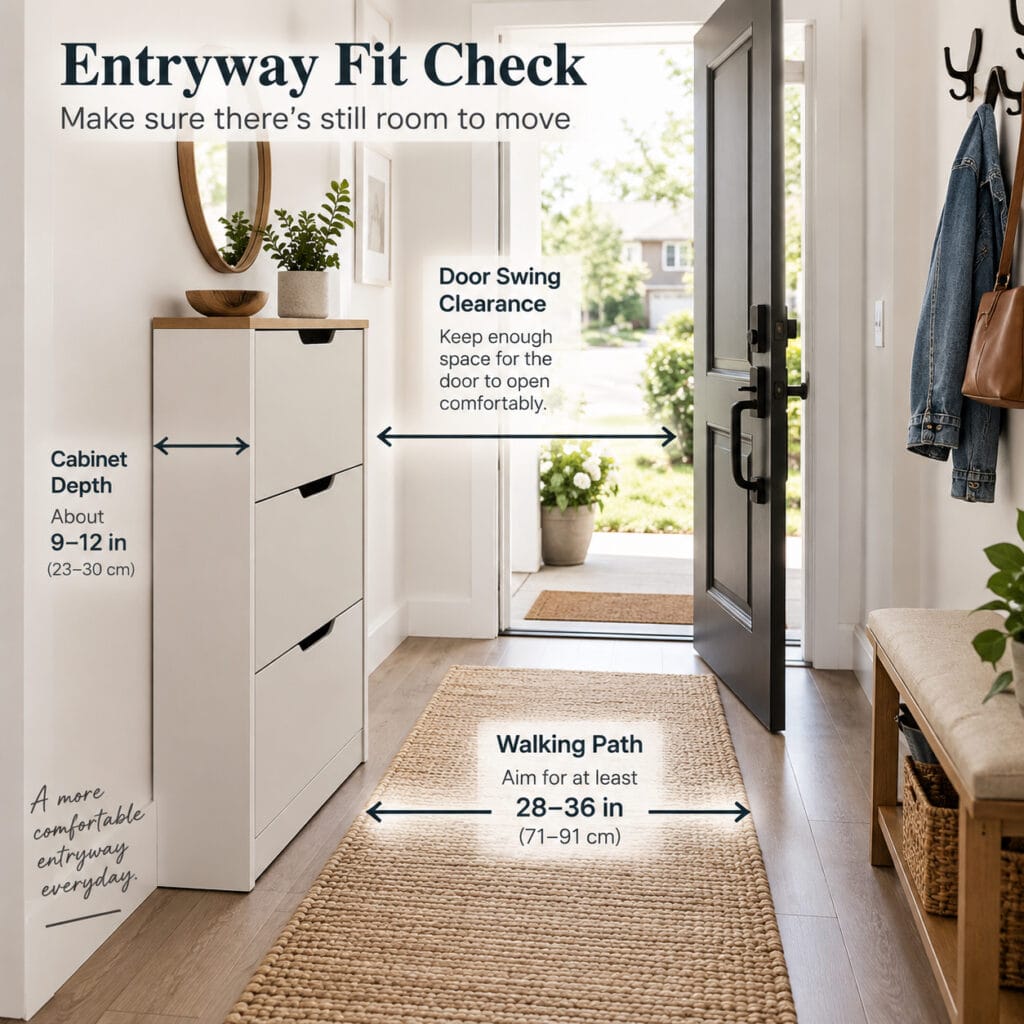
This is especially true with:
- deep cabinets;
- wide hinged-door cabinets;
- large storage benches.
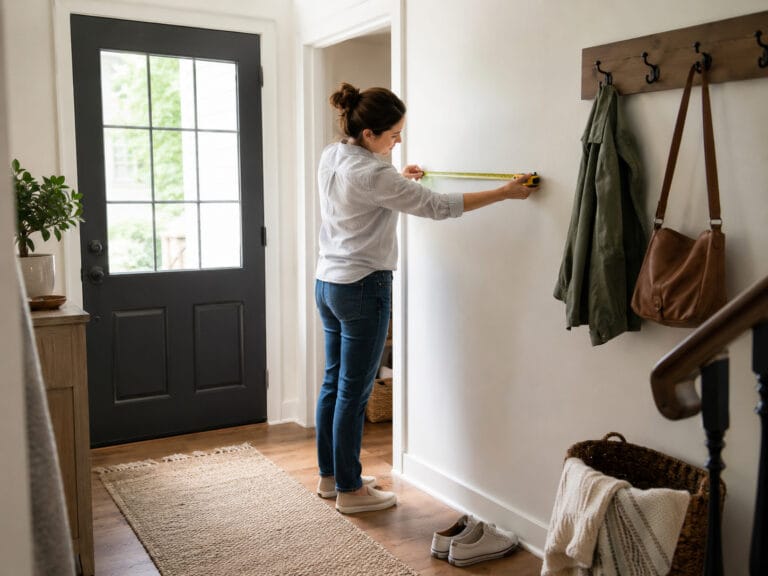
Before buying, also check:
- available wall width;
- cabinet depth;
- front door swing;
- walking path;
- nearby furniture.
For a complete measuring process, see our How to Measure Your Entryway Before Buying Furniture guide.
A 24-pair shoe cabinet is not useful if it makes the entryway uncomfortable to walk through.
Safety Matters With Tall, Narrow Shoe Cabinets
Tall, narrow cabinets can have a higher center of gravity than low storage furniture.
Once filled with shoes, they can also become heavier.
If the cabinet includes an anti-tip kit, use it according to the manufacturer’s installation instructions.
This is especially important in homes with:
- children;
- pets;
- narrow traffic paths where furniture may be bumped.
Capacity should never be considered separately from stability.
Don’t Forget Ventilation
Closed shoe cabinets help keep an entryway looking tidy, but tightly packed storage can trap:
- moisture;
- odors;
- damp air.
Features such as:
- ventilation holes;
- slatted panels;
- small openings;
- raised bottoms;
can help improve airflow.
If shoes are wet, allow them to dry before placing them into a fully enclosed cabinet whenever possible.
A cabinet that holds more pairs is not automatically better if the interior becomes damp or difficult to maintain.
How to Estimate Real Capacity Before Buying
Use this five-step method.
Step 1: Count Only the Shoes You Actually Want Near the Door
Do not count every pair you own.
Count only the shoes you realistically want stored in the entryway.
For example:
- two pairs of sneakers;
- one pair of work shoes;
- one pair of flats;
- two pairs of children’s shoes.
You may discover that you only need storage for 6–8 pairs.
Step 2: Separate the Bulky Shoes
Set aside:
- boots;
- high-tops;
- thick athletic shoes;
- work shoes.
These can reduce usable capacity more than expected.
Step 3: Measure the Largest Pair
Measure:
- length;
- width;
- height.
Use that as your worst-case fit test.
Step 4: Check the Interior Layout
Look for:
- usable drawer width;
- shelf depth;
- divider position;
- vertical clearance.
Step 5: Adjust the Advertised Capacity
If your shoes are larger, taller, or bulkier than the shoes shown in the product photos, plan for fewer pairs.
That creates a much more realistic expectation.
A Simple Capacity Example
Imagine a slim shoe cabinet advertised for:
16 pairs
Your household wants to store:
- 6 pairs of women’s flats;
- 4 pairs of men’s sneakers;
- 2 pairs of high-tops;
- 2 pairs of ankle boots.
That is only 14 pairs.
But the cabinet still may not hold all 14 comfortably.
Why?
Because the bulkier shoes use more internal space.
A realistic result may look like this:
- flats: close to advertised density;
- sneakers: moderate reduction;
- high-tops: larger reduction;
- ankle boots: may require divider removal or another storage area.
The important lesson is:
Shoe mix matters just as much as pair count.
Common Shoe Cabinet Capacity Mistakes
Mistake 1: Trusting the Pair Count Without Checking Interior Dimensions
“20 pairs” sounds clear.
But without usable interior measurements, it does not tell you whether your shoes will actually fit.
Mistake 2: Looking Only at Shoe Size
Shoe size does not fully describe:
- width;
- sole thickness;
- upper height;
- overall bulk.
Measure the actual shoe instead.
Mistake 3: Forgetting Boots
Boots can dramatically reduce real capacity.
Plan for them separately.
Mistake 4: Buying the Largest Cabinet Available
More storage is not always better in a tight entryway.
A smaller cabinet that holds your daily shoes and preserves walking space may be more useful.
Mistake 5: Ignoring How Often You Wear Each Pair
Daily shoes should be easy to reach.
Shoes worn only occasionally do not necessarily need the most valuable entryway storage space.
HomyEntry Shoe Cabinet Capacity Check
Before ordering, confirm these five things:
- Usable interior width
Check the real space inside each drawer or shelf, not just overall cabinet width. - Largest shoe length
Measure the longest pair you actually plan to store. - Shoe height
Pay special attention to sneakers, high-tops, and boots. - Divider flexibility
Are dividers fixed, removable, or adjustable? - Real household shoe mix
Think about adult shoes, children’s shoes, boots, and everyday footwear together.
The most useful rule is:
Buy for your largest everyday shoes, not for the advertised pair count alone.
Final Recommendation
The number of shoes an entryway cabinet can hold depends on much more than the number printed on the product page.
Start with:
- the shoes you actually use;
- your largest everyday pair;
- the cabinet’s interior layout;
- the available entryway space.
For narrow entryways, flip-drawer cabinets can provide useful storage with a relatively shallow footprint.
For households with many bulky shoes or boots, open shelves or cabinets with adjustable interior layouts may work better.
The best shoe cabinet is not necessarily the one with the highest advertised capacity.
It is the one that holds your real footwear comfortably while keeping the entryway organized, stable, and easy to use.
Explore more furniture, storage, and layout ideas on our Entryway page.
Frequently Asked Questions
How many pairs of shoes fit in a shoe cabinet?
Small shoe cabinets may hold around 4–8 pairs, while larger multi-drawer cabinets may hold 15–24 pairs or more. Real capacity depends on shoe size, shoe type, and interior layout.
How many pairs fit in a flip-drawer shoe cabinet?
A small flip-drawer cabinet may hold around 4–8 pairs, while larger two- or three-drawer designs may hold 8–24 pairs. Bulky footwear can reduce the real capacity.
Do men’s shoes reduce shoe cabinet capacity?
They can. Larger sneakers and work shoes usually use more width and depth than smaller shoes, so a cabinet may hold fewer pairs than advertised.
Can you store boots in a flip-drawer shoe cabinet?
Some ankle boots may fit if the cabinet has enough vertical clearance or removable dividers. Taller boots usually need another storage area.
Is a shoe bench better than a shoe cabinet?
A bench is useful when you want seating and shoe storage together. A shoe cabinet usually provides more total shoe capacity in the same wall area. The better choice depends on your space and daily routine.
Should I trust the shoe-pair capacity listed by the manufacturer?
Use it as a planning estimate rather than an exact guarantee. Compare the cabinet’s usable interior dimensions with the shoes you actually plan to store.
What should I measure before buying a shoe cabinet?
Measure the cabinet location, your largest everyday shoes, usable interior shelf or drawer dimensions, and any door or walking clearance around the cabinet.