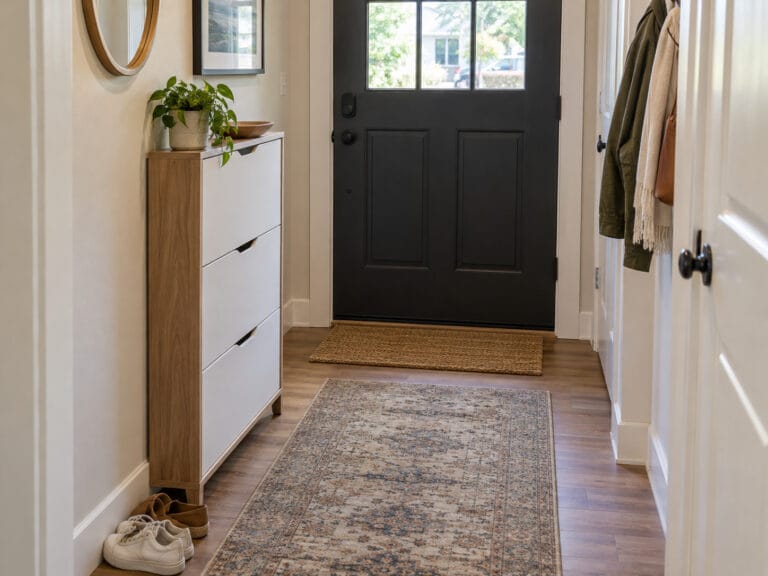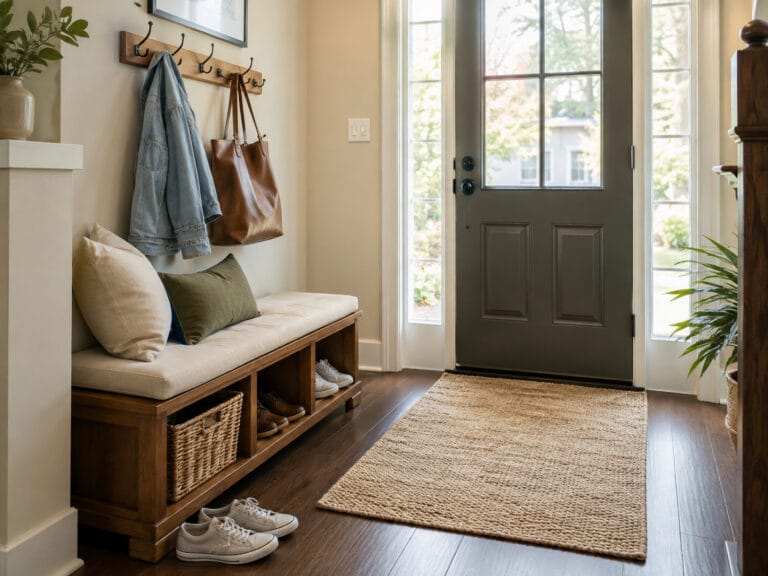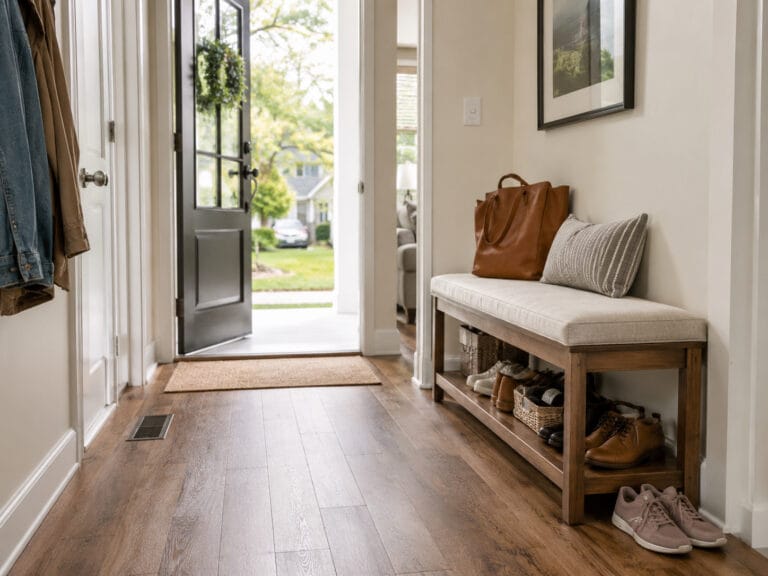
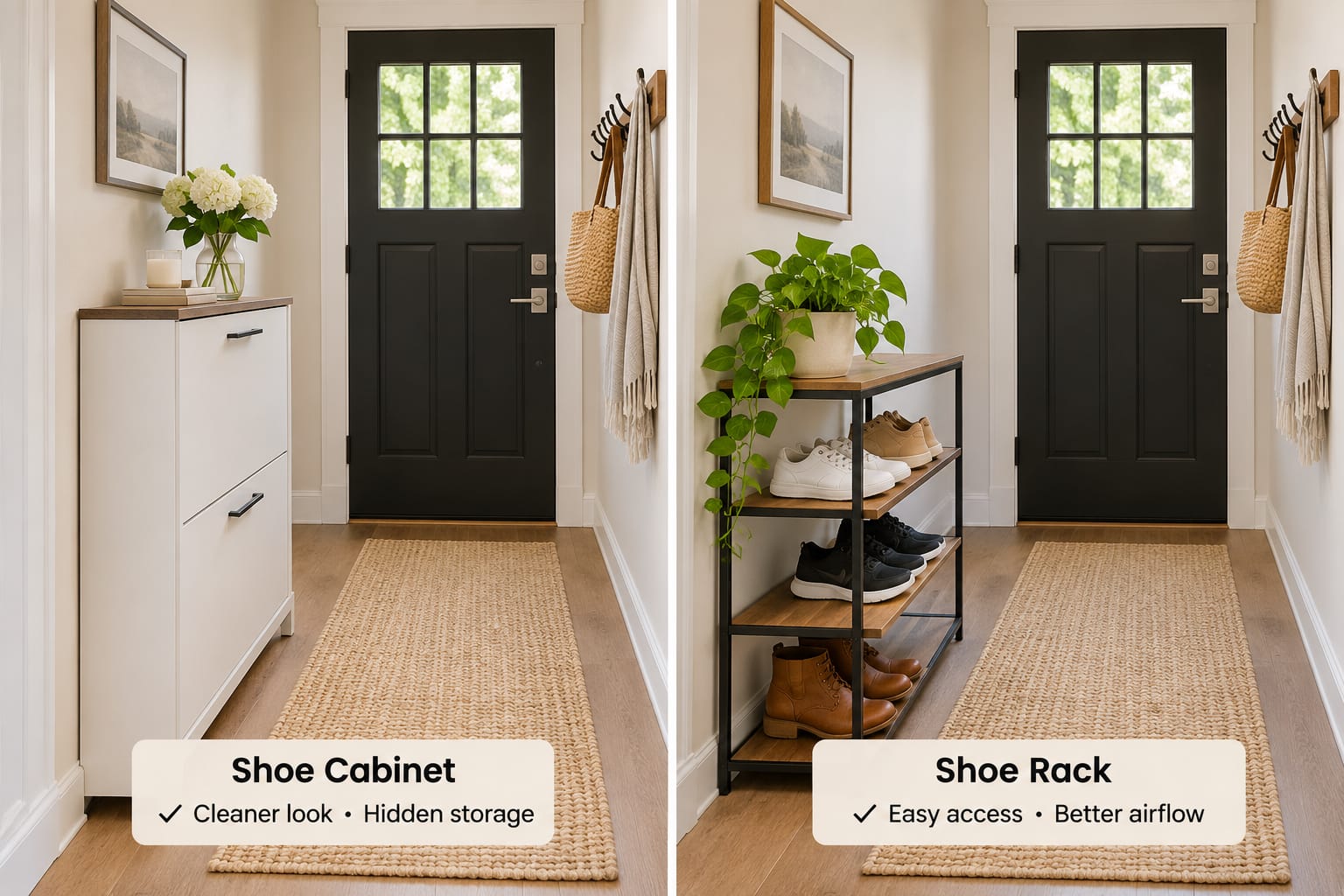
A small entryway can become cluttered quickly, especially when everyday shoes end up scattered near the front door. A shoe cabinet and an open shoe rack can both help organize footwear, but they solve the problem in different ways.
A shoe cabinet keeps shoes behind doors or enclosed compartments, creating a cleaner, less cluttered appearance. An open shoe rack keeps footwear visible and easy to reach, usually with better airflow and a simpler design.
So, which one is better for a small entryway?
It depends on how much space you have, what types of shoes you need to store, how often your household uses them, and whether you prefer hidden storage or quick access.
This guide compares shoe cabinets and open shoe racks based on everyday use, available space, ventilation, footwear compatibility, and maintenance to help you choose a setup that works for your home.
Table of Contents
Quick Answer: Should You Choose a Shoe Cabinet or a Shoe Rack?
For a small entryway, a shoe cabinet is usually a better fit if you want to hide everyday footwear and keep the entrance looking tidy. An open shoe rack is often more practical if you prioritize easy access, airflow, flexibility, and a lower-cost storage solution.
| Your Main Priority | Better Option | Why |
|---|---|---|
| A cleaner, less cluttered appearance | Shoe cabinet | Keeps shoes out of sight |
| Hidden shoe storage | Shoe cabinet | Enclosed compartments conceal footwear |
| Limited floor depth | Slim flip-drawer cabinet | Some designs have a shallow closed profile |
| Lower purchase cost | Open shoe rack | Usually has a simpler construction |
| Quick access to everyday shoes | Open shoe rack | Shoes are visible and easy to reach |
| Better natural airflow | Open shoe rack | Open shelves allow air to circulate |
| Boots and bulky footwear | Open shoe rack | Shelf spacing can be more flexible |
| Less dust on stored shoes | Shoe cabinet | Enclosed fronts provide a barrier against dust |
Neither option is automatically better for every home. The right choice depends on your entryway layout and how your household actually uses its shoes.
What Is the Difference Between a Shoe Cabinet and a Shoe Rack?
The main difference is how each design stores and displays footwear.
A shoe cabinet is an enclosed storage unit with doors, drawers, or individual compartments. Shoes stay behind the front panels, helping the entryway look more organized even when several pairs are stored inside.
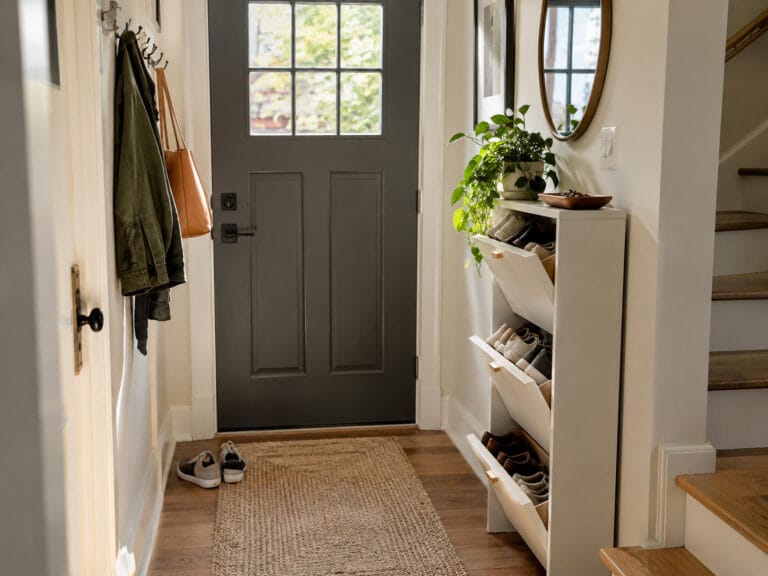
Some slim shoe cabinets use angled flip drawers. Instead of storing shoes flat on deep shelves, these compartments hold footwear at an angle, allowing the cabinet to have a shallower closed depth.
An open shoe rack uses exposed shelves, bars, or tiers to hold shoes. Footwear remains visible, so you can usually grab a pair or put it away without opening a door or drawer.
In simple terms:
- Shoe cabinets prioritize hidden storage and a cleaner appearance.
- Open shoe racks prioritize accessibility, airflow, and straightforward organization.
1. Shoe Cabinet: Best for Hidden Storage
If you prefer not to see several pairs of shoes near the front door, a shoe cabinet can make a noticeable difference.
Instead of leaving sneakers, sandals, and everyday footwear exposed, you can store them behind closed panels and keep the entrance looking more orderly.
A Cleaner Look with Less Visual Clutter
The biggest advantage of a shoe cabinet is that it hides everyday clutter.
Even when several family members share the same entrance, their shoes can be placed inside separate compartments rather than left along the wall.
This is especially useful in smaller homes where the front door opens directly into a living room, dining area, or shared hallway. A closed cabinet creates a more finished appearance without requiring a separate mudroom.
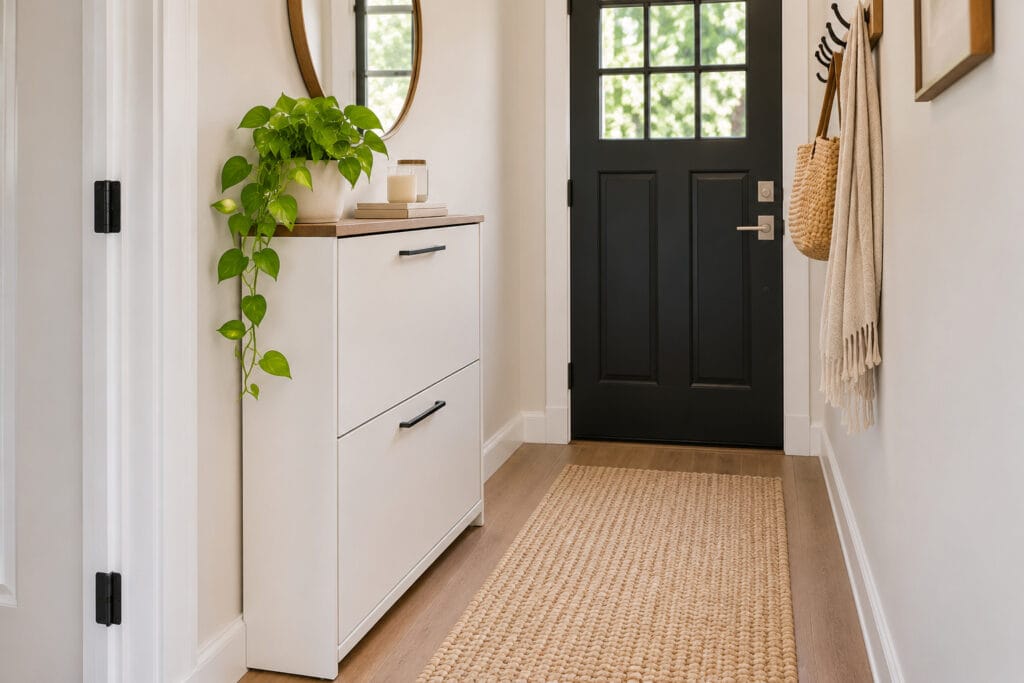
Hidden Storage Can Work in a Shallow Space
Some shoe cabinets are designed specifically for narrow entrances and hallways.
For example, IKEA’s STÄLL shoe cabinet measures just 6¾ inches deep. Its four-compartment design is intended to help organize footwear while taking up less floor space.
Another example is IKEA’s TRONES shoe storage cabinet, which measures 7⅛ inches deep. Its shallow design makes it suitable for smaller entrances and hallways.
These examples show that not every shoe cabinet needs to be a deep piece of furniture. However, different designs have different internal layouts, storage capacities, and installation requirements.
The important thing is to compare the actual dimensions and compartment design rather than assume every shoe cabinet takes up the same amount of space.
For narrow entryways, slim flip-drawer cabinets are another option. Their angled compartments can reduce the cabinet’s closed depth, although the drawers still need room to open.
A More Finished Furniture Appearance
Compared with a basic open rack, a shoe cabinet often looks more like a complete piece of entryway furniture.
Depending on its design, it can coordinate with an entryway bench, console table, wall mirror, or other storage furniture.
This makes it particularly useful when the entrance is visible from the main living area and you want the space to feel organized rather than purely functional.
Potential Drawbacks of Shoe Cabinets
Despite their advantages, enclosed shoe cabinets have a few limitations.
- Higher purchase cost: Doors, hinges, drawer mechanisms, and internal compartments can make cabinets more expensive than simple open racks.
- Limited space for bulky footwear: Narrow flip-drawer compartments may not accommodate every boot, high-top sneaker, or oversized shoe.
- Less natural airflow: Shoes stored behind closed panels have less exposure to circulating air.
- An extra step when retrieving shoes: You need to open a door or drawer before taking out your footwear.
If you regularly store large boots or frequently worn athletic shoes, check the internal compartment dimensions before choosing a cabinet.
2. Open Shoe Rack: Best for Easy Access and Everyday Use
An open shoe rack takes a more straightforward approach to shoe storage. Instead of hiding footwear, it keeps shoes organized on exposed shelves where everyone can see and reach them.
For busy households, this simplicity can be a real advantage.
Everyday Shoes Are Easier to Reach
You don’t need to open a cabinet or pull out a drawer to find your shoes.
Everything is visible, making it easier for family members to grab their everyday sneakers, sandals, or casual shoes when heading out.
This can also be helpful for children who are learning to put their shoes away independently. An accessible shelf gives them a clear place to return their footwear.
Better Natural Airflow
Open shelves allow air to circulate around shoes more freely than enclosed compartments.
This is particularly useful for footwear worn during exercise, on rainy days, or in other situations where shoes may retain moisture.
However, good airflow does not replace proper cleaning and drying. Wet or muddy footwear should be cleaned when necessary and allowed to dry before being placed into long-term storage.
Give Worn Shoes Time to Dry
One practical advantage of an open shoe rack is that it provides a convenient place for shoes to air out after daily use.
The Missouri Podiatric Medical Association recommends avoiding wearing the same pair of shoes two days in a row. For frequently worn athletic shoes, it suggests alternating pairs and allowing at least 24 hours for them to air out between wearings.
You can read its advice in the Missouri Podiatric Medical Association’s foot odor prevention guide.
If you prefer enclosed storage, let damp footwear dry first rather than placing it directly into a crowded cabinet.
You can also keep a small open area for frequently worn shoes and use the cabinet for footwear that is already dry and ready to store.
Usually More Budget-Friendly
Open shoe racks generally have simpler construction.
Without enclosed doors or complicated drawer mechanisms, many models offer practical shoe storage at a lower purchase cost.
They can also be easier to move when rearranging furniture or changing homes, which makes them a convenient option for renters and people who prefer flexible storage.
More Flexible for Different Types of Shoes
Open shelves can be more accommodating when your household wears different types of footwear.
Depending on shelf spacing, an open rack may hold:
- Everyday sneakers and running shoes
- Sandals and slippers
- High-top sneakers
- Ankle boots
- Larger or bulkier footwear
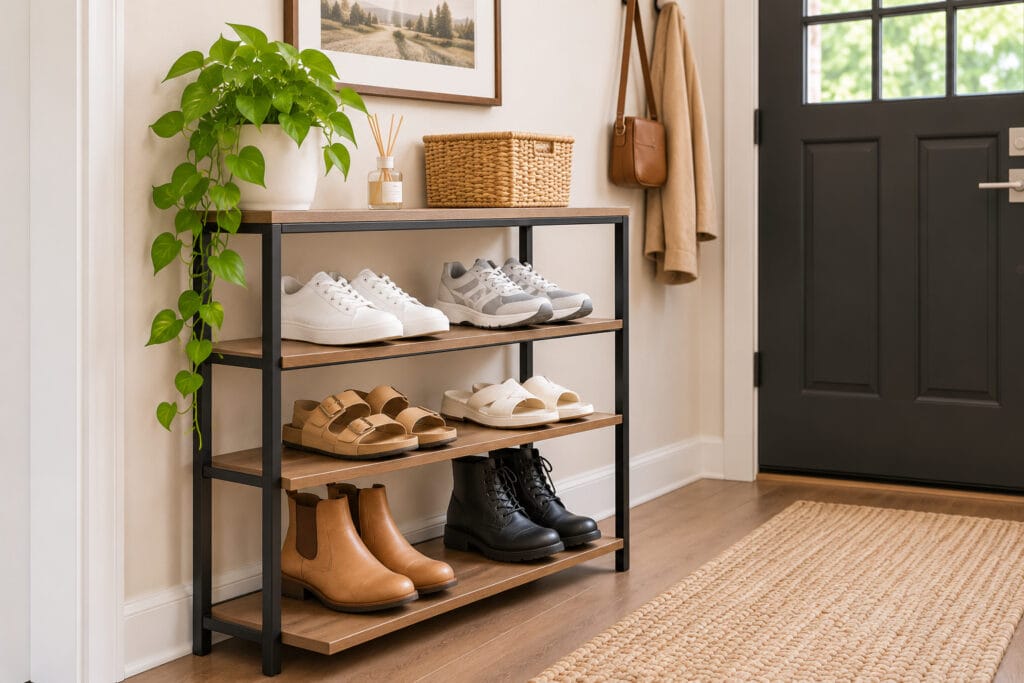
Some racks also have adjustable or removable shelves, making it easier to create extra vertical space when needed.
However, don’t assume every shoe rack can accommodate tall boots. Always check the available shelf height, width, and depth before purchasing.
Potential Drawbacks of Open Shoe Racks
Open racks are practical, but they are not ideal for every entryway.
- Shoes remain visible: Different colors and styles can make a small entrance look cluttered, even when everything is arranged neatly.
- Less protection from dust: Exposed footwear is more likely to collect dust and household debris.
- Regular organization is necessary: Shoes can quickly end up on the floor if family members don’t return them to the shelves.
- The actual footprint still matters: Some racks have relatively deep shelves or wide frames that can take up more room than expected.
An open shoe rack works best when your household prefers easy access and is willing to keep the shelves reasonably organized.
3. Shoe Cabinet vs. Shoe Rack: Side-by-Side Comparison
Here is a closer look at the differences that matter most when choosing shoe storage for a small entryway.
| Comparison | Shoe Cabinet | Open Shoe Rack |
|---|---|---|
| Appearance | Enclosed and tidy | Open and functional |
| Storage style | Hidden compartments | Exposed shelves |
| Typical construction | Doors, drawers, internal dividers | Shelves, bars, or tiers |
| Floor depth | Some slim designs are very shallow | Depends on shelf depth and frame |
| Access | Requires opening a door or drawer | Shoes are directly accessible |
| Airflow | More limited | Better natural circulation |
| Dust protection | Better protection from dust | Shoes remain exposed |
| Bulky footwear | May be restricted by compartment size | Often more flexible |
| Daily maintenance | Clean the cabinet inside and out | Wipe exposed shelves and organize shoes |
| Purchase cost | Usually higher | Usually lower |
| Best for | Hidden, organized storage | Convenient everyday access |
The most important difference isn’t simply how many pairs of shoes each option can hold.
It’s whether the storage design fits your entryway and the way your household uses footwear every day.
4. Which Option Works Better for Different Entryways?
Your entryway layout and daily routine can make one option much more practical than the other.
Narrow Hallway with Limited Floor Space
A slim flip-drawer shoe cabinet can be a good choice when floor depth is the main limitation.
Its angled storage compartments allow the cabinet to have a relatively shallow closed profile compared with many conventional cabinets.
However, remember that opening the drawers requires additional space in front of the cabinet.
If an open drawer would block the front door or interfere with the main walkway, a narrow open shoe rack may be a better solution.
Our suggestion: Consider a slim flip-drawer cabinet when hidden storage is important and the opening space works with your layout.
For more detailed measurements, see our guide on how much space a flip-drawer shoe cabinet needs.
Busy Entryways Used by Multiple Family Members
When several people share the same entrance, quick access becomes more important.
An open shoe rack allows everyone to find and retrieve their everyday footwear without repeatedly opening and closing drawers.
This can be especially useful for families with children or households where several people leave home around the same time.
If the entrance is visible from the living room, however, a closed cabinet may provide a cleaner overall appearance.
Our suggestion: Choose an open rack when convenience is the priority, or a cabinet when keeping the shared living space visually tidy matters more.
Homes with Boots and Bulky Footwear
Not all footwear fits comfortably into compact storage compartments.
Tall boots, high-top sneakers, and oversized athletic shoes may need additional vertical or internal space.
Open shoe racks are often more flexible because the footwear isn’t restricted by enclosed compartments or angled drawer designs.
Some cabinets offer larger compartments or dedicated boot storage, but you should check the actual internal dimensions before buying.
Our suggestion: If your household owns several different types of footwear, an adjustable open rack is often the more flexible option.
Entryways Connected Directly to the Living Room
When the front door opens directly into a shared living space, exposed shoes can become part of the room’s overall appearance.
A closed shoe cabinet helps create a more consistent look by keeping everyday footwear out of sight.
An open rack can still work, but its appearance depends more heavily on how neatly the shoes are arranged.
Our suggestion: Choose an enclosed cabinet if visual organization and hidden storage are your main priorities.
Limited Furniture Budget
If you simply need a practical place to organize everyday shoes, an open shoe rack is usually the more economical starting point.
Its simpler construction provides basic storage without the additional components found in many enclosed cabinets.
You can always upgrade to a cabinet later if your storage needs or design preferences change.
Our suggestion: Choose an open shoe rack when affordability and straightforward functionality matter most.
5. How to Choose the Right Option Before Buying
Before deciding between a shoe cabinet and an open shoe rack, consider these five questions.
1. How Much Floor Space Do You Actually Have?
Measure the available width and depth where you plan to place the furniture.
Don’t measure only the wall. Also consider:
- The main walking path
- The front door’s opening range
- Nearby furniture and doorways
- The space needed to access stored shoes
For a shoe cabinet, account for the room required to open its doors or flip drawers. For an open rack, check whether the shelf depth will interfere with normal movement.
2. What Types of Shoes Will You Store?
Think about the footwear your household actually uses.
Everyday sneakers, flats, and sandals are generally easier to accommodate in compact storage spaces.
Boots, high-top sneakers, and bulky athletic shoes may need larger compartments or more flexible shelf spacing.
Choose a design that fits your everyday footwear rather than relying only on the advertised storage capacity.
For a closer look at storage capacity, see our guide on how many pairs of shoes fit in a shoe cabinet.
3. Do You Prefer Hidden Storage or Quick Access?
This is one of the easiest ways to narrow down your options.
If you prefer a clean appearance and don’t want to see shoes near the front door, an enclosed cabinet is likely a better fit.
If you want to see every pair and retrieve shoes without opening anything, an open rack will usually be more convenient.
4. How Many People Will Use It?
A small cabinet may be sufficient for someone living alone or a household with only a few regularly worn pairs.
A larger household with frequent coming and going may benefit from an open rack, where everyone can access their shoes directly.
Think about how often the storage will be used and whether every family member can comfortably reach their assigned space.
5. How Much Daily Maintenance Are You Comfortable With?
A shoe cabinet hides stored footwear, but you still need to clean the interior and allow damp shoes to dry before putting them away.
An open rack makes dust and dirt easier to notice, but its exposed shelves are also easy to inspect and wipe down.
Neither option eliminates maintenance. The difference is where you need to clean and how exposed your shoes are to everyday dust.
6. Can You Use Both a Shoe Cabinet and a Shoe Rack?
Yes. In some homes, combining the two can be more practical than choosing only one.
For example, you could use a closed shoe cabinet for dry footwear that you want to keep organized and out of sight, while a small open rack holds frequently worn shoes that need easy access.
This creates a simple distinction between shoes that are ready to be stored and those that have just been worn and need time to air out.
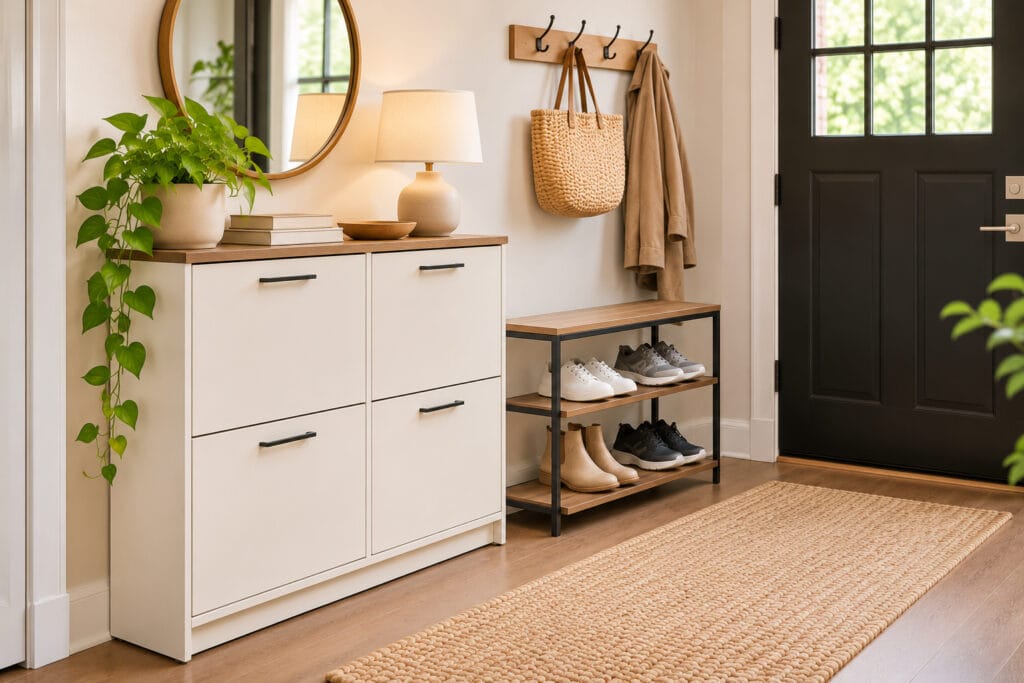
However, using both isn’t always a good idea in a small entryway.
Adding another piece of furniture can make the entrance feel crowded and reduce the available walking space.
Before combining storage solutions, make sure both pieces fit comfortably without interfering with the front door or everyday movement.
A Practical Shoe Storage Fit Check
Before purchasing either type of furniture, use this checklist to evaluate your entryway.
- Available depth: Have you measured the actual floor space and the remaining walkway after placing the furniture?
- Door clearance: Can the front door and nearby doors open fully without hitting the furniture?
- Footwear fit: Can your longest and bulkiest everyday shoes fit comfortably?
- Access: If you choose a cabinet, is there enough room to open its doors or flip drawers?
- Daily use: Does the design match how often your household retrieves and puts away shoes?
- Furniture stability: Does the manufacturer recommend wall anchoring, and is the appropriate mounting hardware available?
Check Furniture Stability and Wall Anchoring
Before choosing a tall or narrow shoe cabinet, check its stability and the manufacturer’s installation instructions.
Some freestanding storage units are designed to be secured to the wall. The appropriate fasteners depend on the wall material and the manufacturer’s requirements.
This is especially important in homes where young children may be present.
The U.S. Consumer Product Safety Commission’s Anchor It! campaign recommends securing furniture that could tip over and following the manufacturer’s installation instructions.
Don’t assume every shoe cabinet includes the necessary mounting hardware. Check the product instructions before installation.
The most practical rule is simple: choose storage that keeps your shoes organized without making the entryway harder to use.
Final Recommendation: Shoe Cabinet or Shoe Rack?
A shoe cabinet and an open shoe rack solve the same basic problem, but they suit different households and entryway layouts.
Choose a shoe cabinet if you want:
- A cleaner, more finished appearance
- Hidden shoe storage
- Less visible clutter near the front door
- A compact flip-drawer design for a narrow entryway
- Storage that coordinates with other entryway furniture
Choose an open shoe rack if you prefer:
- A more affordable storage option
- Easy access to everyday footwear
- Better natural airflow
- More flexibility for boots and bulky shoes
- A simple storage system for a busy household
For many small entryways, a slim shoe cabinet is appealing because it combines hidden storage with a relatively compact footprint.
However, if your household frequently changes shoes, stores many different footwear styles, or prefers a lower-cost solution, an open shoe rack may be more practical.
The best shoe storage furniture isn’t necessarily the one with the most compartments, the smallest advertised dimensions, or the lowest price.
It’s the one that keeps your shoes organized without making your entryway harder to use.
Explore our Shoe Storage collection to compare different storage styles and find an option that fits your space.
Frequently Asked Questions
Is A Shoe Cabinet Better Than An Open Shoe Rack?
Not necessarily. A shoe cabinet is better for hidden storage and a cleaner appearance, while an open shoe rack offers easier access, better airflow, and often a lower purchase cost. The right choice depends on your entryway layout and daily habits.
Are Shoe Cabinets Suitable For Small Entryways?
Yes. Some slim shoe cabinets, particularly flip-drawer designs, are made for narrow spaces. However, check both the closed cabinet depth and the additional clearance needed to open the drawers before buying.
Does An Open Shoe Rack Prevent Shoe Odors?
Open shelves allow more air to circulate around footwear, which can help shoes air out. However, airflow alone doesn’t eliminate moisture or odors. Clean and dry wet footwear properly, and consider alternating shoes between wears.
Can Boots Fit Inside A Shoe Cabinet?
Some cabinets have enough room for ankle boots or larger footwear, but slim flip-drawer compartments may have limited internal space. Check the actual compartment dimensions before purchasing. Open racks with adjustable shelves are often more flexible for taller boots.
Is An Open Shoe Rack Cheaper Than A Shoe Cabinet?
Generally, yes. Open shoe racks usually have simpler construction and fewer components, which often makes them less expensive. Actual prices still depend on the materials, size, design, and build quality.
How Should You Choose Shoe Storage For A Very Narrow Hallway?
Start by measuring the available floor depth and the remaining walkway after placing the furniture.
If you prefer hidden storage, consider a slim flip-drawer shoe cabinet, provided its drawers can open without blocking the front door or main walkway.
If easy access is more important, a narrow open shoe rack may be a better fit.
Whichever option you choose, make sure it doesn’t interfere with door movement or everyday passage.